How to play Tax Avoiders online
- Move John Q: arrow keys (all four directions)
- Jump over or through the character chasing you: Space
- Start a new game: F12 (Reset)
Gameplay
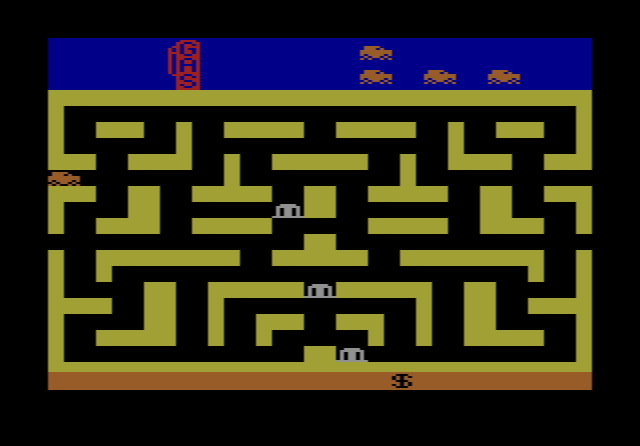
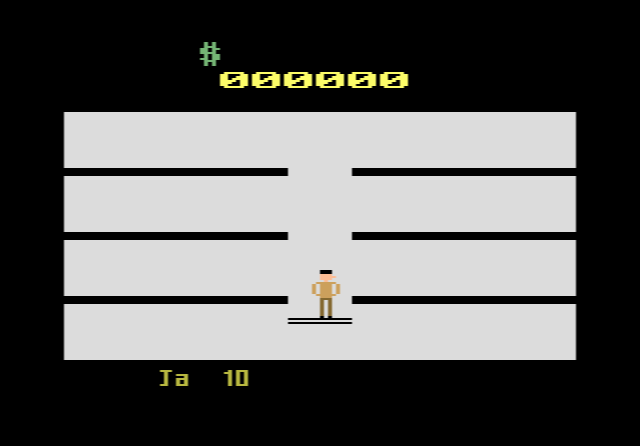
The year has four seasons, each with two screens. On the income screen you collect dollar signs and avoid red tape, which costs $2,000 per touch. A slow elevator in the middle carries you between the “bureaucratic levels”.
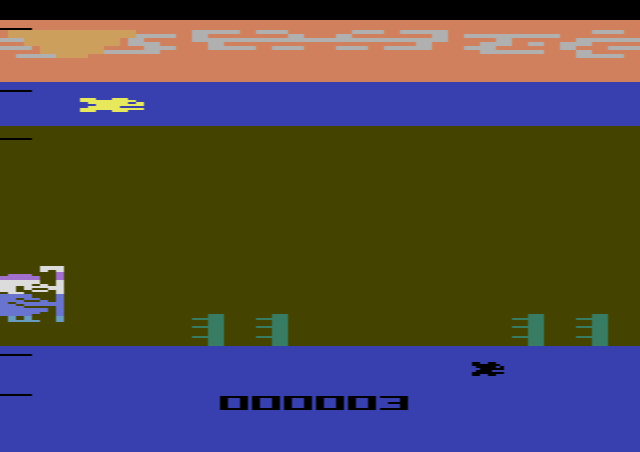
Halfway through the season you switch to the investment screen and put tax-sheltered investments, such as oil and gas, solar energy or research and development, into your briefcase. Each has a 50/50 chance of earning or losing $1,000 a day and shelters income differently. One character chases you, changing colour:
- Black – Eggie, the IRS agent. If he catches you, you are audited, always lose, and are taxed at 50%.
- Pink – Waggie, the accountant. He charges $1,000 but always offers a better shelter.
- Green – Toodles, the investment advisor. Catch him for the best shelter available.
At the end of each season, tax is taken based on the investment in your portfolio and you go back to work. The goal is $1,000,000 after taxes when the year ends.
Tips
- Jump the IRS agent. An audit costs half your income, so leap over him rather than trying to outrun him.
- Time your meetings. Waiting for green gets the best shelter, but only if enough of the season is left.
- Detour around red tape. A longer route is almost always cheaper than a $2,000 penalty.
History
Besides Wagner, the credits name Todd Clark Holm, an S.E.C.-registered investment advisor, as developer and John Simonds as designer. The game was first planned in 1982. When it finally appeared, Computer Entertainer called it “cleverly conceived but primitively implemented” and thought it would mostly interest collectors. AtariAge notes that it shares gameplay ideas with 20th Century Fox’s Porky’s, though nobody is sure which came first. Game scholar Ian Bogost discusses it in his 2007 book Persuasive Games.