In the early 1980s the best games were in the arcades, and the big question for every home console was how much of an arcade hit it could bring home. On the Atari 2600 the answer changed from game to game. The console had one joystick button, a few kilobytes of cartridge space and a graphics chip designed with Pong and Tank in mind. Here is what survived and what was cut in the best-known conversions. Every game below is playable on this site, so you can check for yourself.
What a conversion usually lost
The same things came up again and again:
- Controls. Arcade cabinets had trackballs, several buttons and even flight yokes. The 2600 joystick had one button, so games had to find new ways to do more than one thing.
- Vector graphics. Games like Asteroids and Battlezone drew sharp lines on special monitors. A normal TV could not show that, so the 2600 versions use solid shapes instead.
- Numbers. Fewer enemies, fewer shields, fewer screens, and often no music.
- Space. Early cartridges held 4 KB. Bigger games needed bank switching, a way for the cartridge to swap between 4 KB blocks, and that made each cartridge cost more to make.
But the conversions also added things. Many offered dozens of variations, two-player modes and easier settings for children that the arcade machines never had.
Space Invaders (1980)
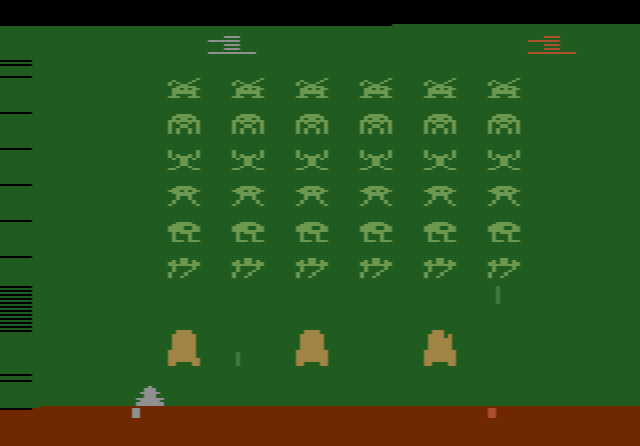
Rick Maurer began his version of Taito’s game on his own in 1978, after Atari’s consumer division had told him to stop. It went ahead once Atari’s CEO Ray Kassar saw how well the arcade game was doing and bought the home rights. No artist was free, so Maurer designed the invaders himself, and they look nothing like the arcade ones. His first version took about 7 KB and had to be cut down to fit.
Space Invaders has 36 invaders instead of 55, and three shields instead of four. In return you get 112 variations: moving shields, zigzagging bombs, invisible invaders, and two-player modes where you race each other or share one cannon. Fellow Atari programmer Rob Fulop later called Maurer a “genius” for animating so many characters and fitting in so many variations. Maurer’s reward for one of Atari’s biggest hits was an $11,000 bonus, and he left the company soon after.
Asteroids (1981)
The arcade Asteroids drew its rocks as thin glowing outlines. On the 2600, Brad Stewart and Bob Smith used solid, coloured rocks. The bigger problem was size. The game would not fit in 4 KB, so Asteroids became the first 2600 game to use bank switching, doubling the cartridge to 8 KB. It kept the thrust, the wraparound screen and the rocks splitting into smaller ones, and it added 66 variations with a choice of shields, hyperspace or an instant flip. It sold more than three million copies.
Missile Command (1981)
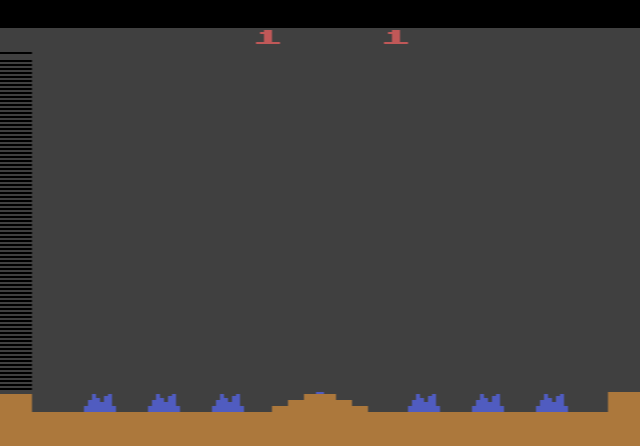
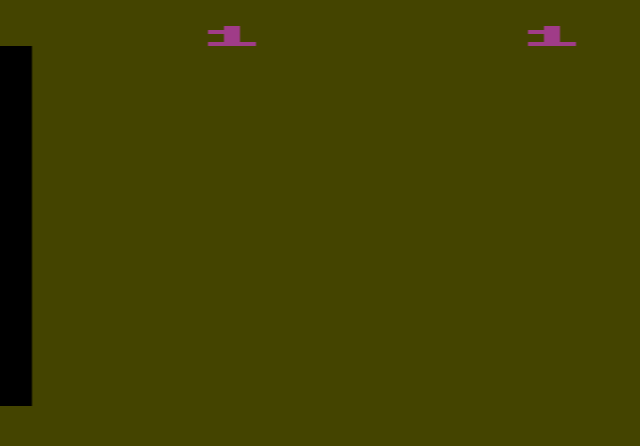
Dave Theurer’s arcade game was played with a trackball, which he chose because it was faster than a joystick, and three buttons, one for each of your three missile bases. Rob Fulop’s Missile Command has one base in the middle, one button and a joystick-driven cursor. In the arcade you could fire from whichever base was closest to the threat, and the centre base’s missiles were faster than the others. At home every shot comes from the same spot. The manual also gave it a new story, with the planet Zardon defending itself against Krytol. Hidden in the cartridge is Fulop’s “RF” Easter egg, described on the game’s page.
Defender (1982)
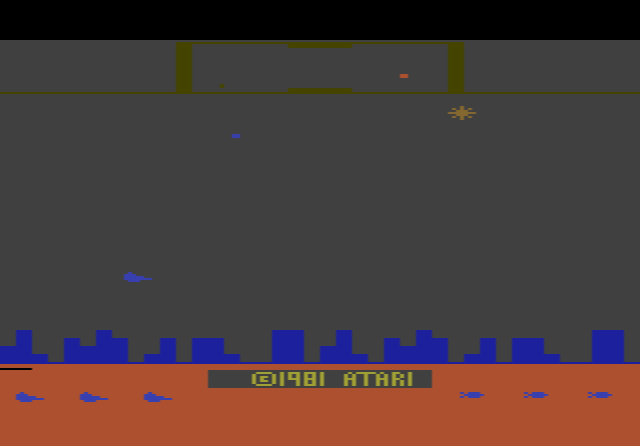
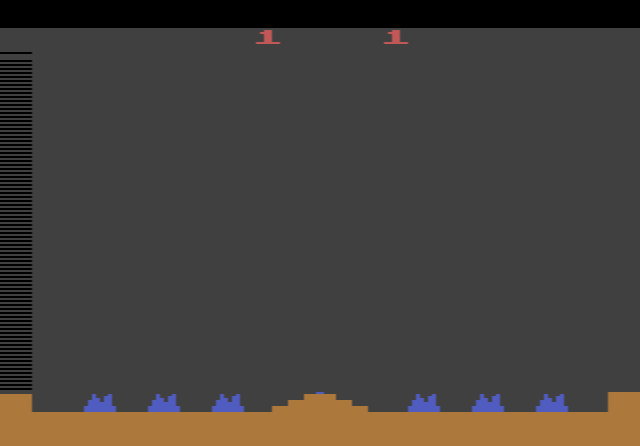
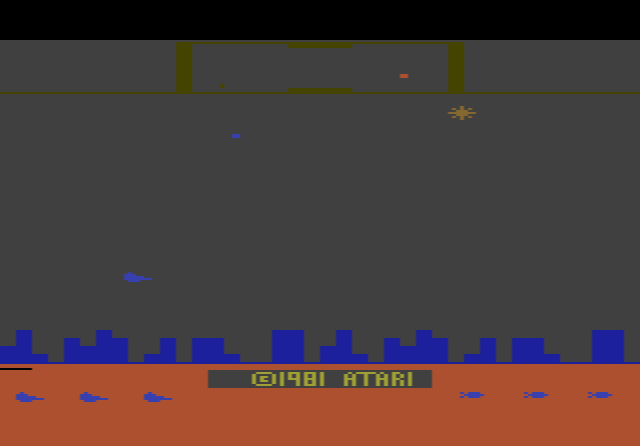
Williams’ Defender was known for its complicated controls: a joystick for up and down, and separate buttons for thrust, reverse, fire, smart bomb and hyperspace. Bob Polaro had one button. In his Defender, what the button does depends on where your ship is. Normally it fires your laser. Move down behind the city and it sets off a smart bomb. Fly all the way up until the ship disappears behind the scanner at the top, and it sends you into hyperspace.
The manual is unusually honest about the other changes. In the arcade, several Landers can kidnap humanoids at the same time; at home, only one at a time. Your own shots cannot kill a humanoid, and you always come out of hyperspace in one piece. Scoring is the same, except that a cluster of Swarmers is worth 500 points instead of 150. Atari sold just over three million copies to shops in 1982, its second best-selling home game that year after Pac-Man. In 1983 so many were sent back that its sales for the year came out below zero.
Pac-Man and Ms. Pac-Man
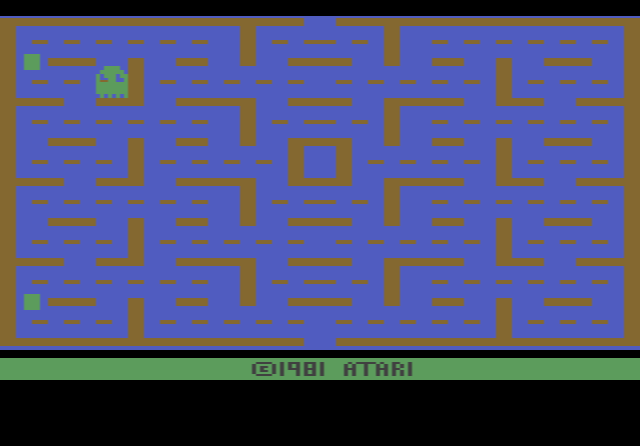
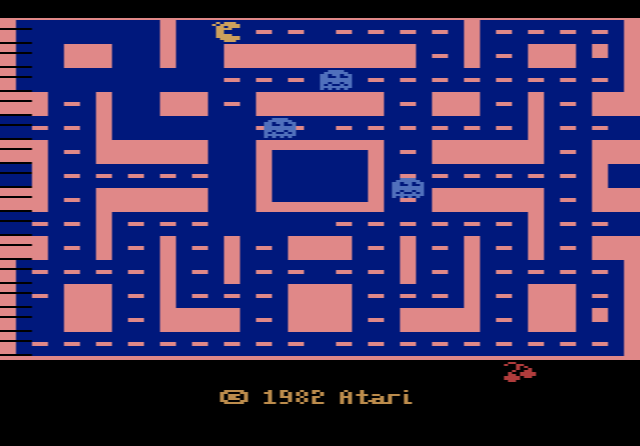
Pac-Man (1982) is the conversion everyone remembers, mostly for its flickering ghosts and a maze that looks little like the arcade one. Ms. Pac-Man, released for the 2600 in February 1983, shows what was possible with more time and space: it has very little flicker, and its manual promises several mazes, floating fruit and pretzels, and a cartoon, like the arcade game. It won the Videogame of the Year award at the 1983 Arcade Awards, tied with Coleco’s Lady Bug. Play them one after the other and the difference is obvious within a minute.
Donkey Kong (1982)
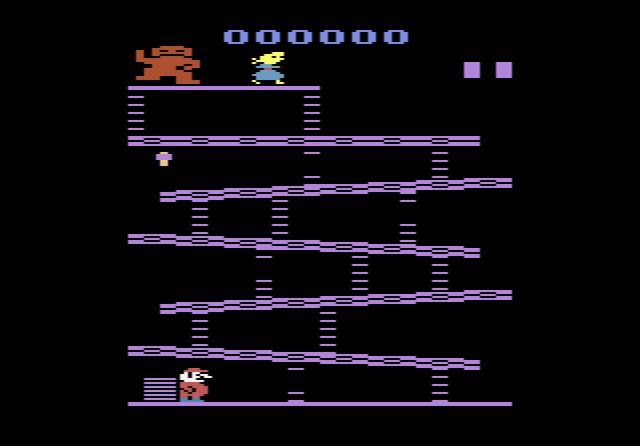
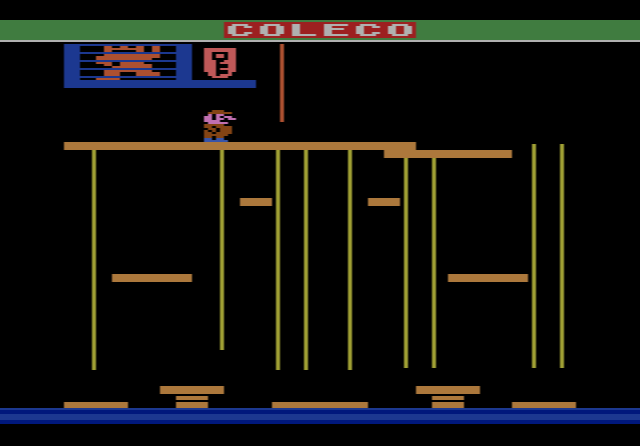
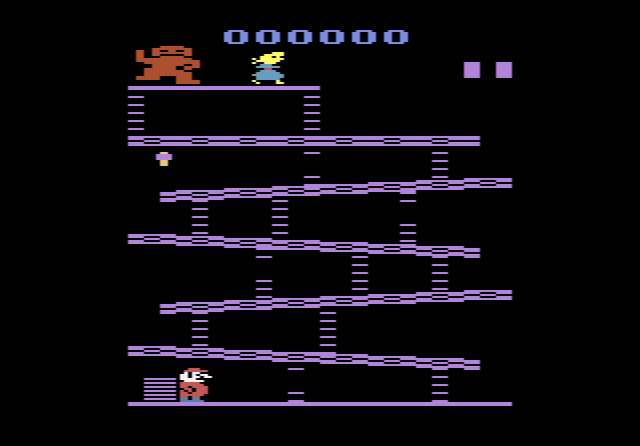
Coleco held the home rights to Nintendo’s game and hired Garry Kitchen to make the 2600 version. He had about 90 days and 4 KB. A bigger cartridge would have cost more to produce, so two of the arcade’s four screens were left out. Donkey Kong on the 2600 has only the girders with the rolling barrels and the rivet screen. What Kitchen kept, he did carefully: slanted girders and characters that do not flicker, both hard on this hardware. It sold four million copies in 1982. Some players have long said Coleco made it weak on purpose to sell its own ColecoVision, which Kitchen has denied. Coleco followed it with Donkey Kong Junior.
Berzerk (1982)
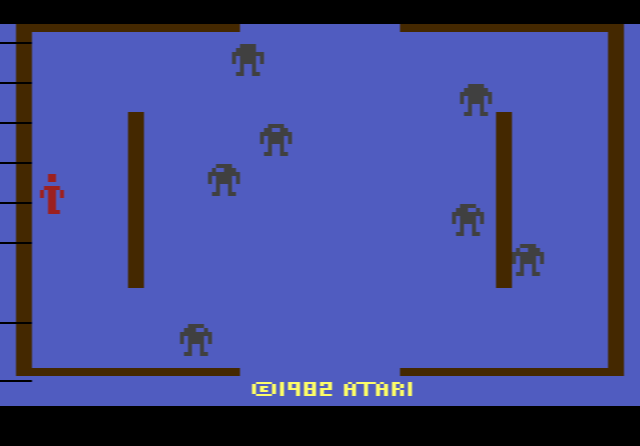
The arcade Berzerk was famous for its robot voices. Dan Hitchens’ 2600 version, released in August 1982, has none, but it keeps the electrified mazes, the robots and the bouncing Evil Otto, and Retro Gamer later called it the best “run-‘n’-gun” game on the console. The arcade designer Alan McNeil was less happy. He felt the home versions looked crude, and said Stern had sold the home rights to Atari for $4 million. The voices did reach the 2600 eventually: in 2002 Mike Mika released a homebrew version with digitised speech. The site has the original Berzerk.
Other publishers’ arcade games
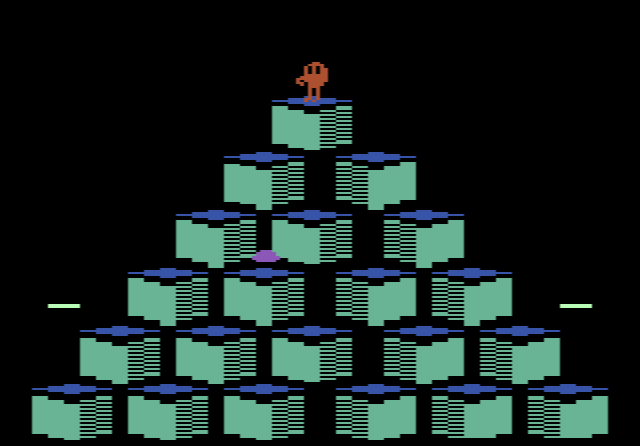
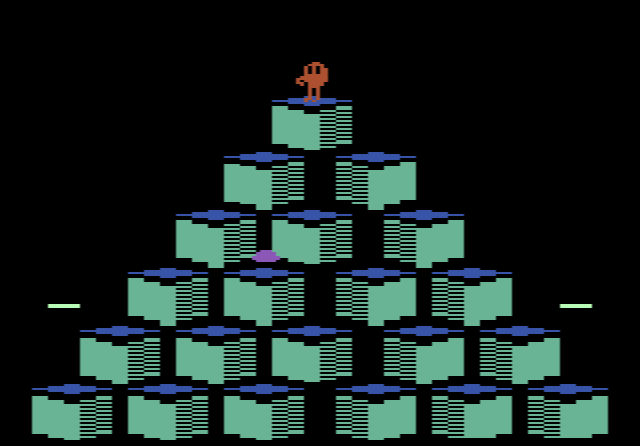
Atari did not have all the licences. Parker Brothers’ Q*bert loses the arcade’s 3D look and one row of the pyramid, as well as the music and the enemies Ugg and Wrongway. Enemies also jump from cube to cube without an animation, so you cannot see which way they are going. In Popeye, Parker Brothers replaced the arcade’s see-saw on the second screen with a trampoline on each side and cut the vulture. Frogger sold four million cartridges in 1982, but Starpath’s cassette version, The Official Frogger, used its Supercharger’s extra memory to look much closer to the arcade.
When the conversions got better
Atari also hired outside developers such as General Computer Corporation (GCC), the company that created the Ms. Pac-Man arcade game. GCC’s Phoenix (1983) keeps the small birds, the big birds that regrow their wings and the alien mothership, one of the first boss fights in a shooter. But the programmers had to cut more than a third of their code to fit it into 8 KB. The music and the star field were among the things that went. GCC’s Battlezone swaps the arcade’s wireframe 3D for normal graphics and shows your own tank on screen, but keeps the radar and the hunt.
Pole Position (1983) cannot match Namco’s scaling graphics, but it keeps what made the arcade game special: the view from behind the car, the qualifying lap and extra time for each lap. It kept selling long after the crash, with more than 570,000 copies sold in the USA between 1986 and 1990. Centipede had to replace the arcade’s trackball with the joystick, and still sold 1,475,240 cartridges in 1982 and 1983.
At a glance
| Game | Kept | Lost or changed |
|---|---|---|
| Space Invaders | Marching rows, shields, mystery ship | 36 invaders instead of 55, 3 shields instead of 4; 112 variations added |
| Asteroids | Thrust, wraparound, splitting rocks | Solid rocks instead of vector lines; 8 KB with bank switching |
| Missile Command | Six cities, fireballs, speeding waves | One base and a joystick instead of three bases and a trackball |
| Defender | Landers, humanoids, scanner, scoring | One button; smart bomb and hyperspace chosen by height |
| Donkey Kong | Barrels, rivets, flicker-free sprites | Two of four screens |
| Berzerk | Mazes, robots, Evil Otto | No speech |
| Q*bert | Colour-changing cubes, Coily, discs | One row, Ugg and Wrongway, music, 3D look |
| Phoenix | Small birds, big birds, the mothership | Music, star field, a third of the code |
Try it yourself
- Pac-Man, then Ms. Pac-Man. The quickest way to see how much conversions improved in a year.
- Frogger, then The Official Frogger. Same arcade game, two publishers, and Starpath’s extra RAM.
- Defender. Drop behind the city and press Space to set off a smart bomb, or hold the up arrow until the ship slips behind the scanner, then press Space for hyperspace.
- Space Invaders. Press F11 to step through the variations and try one with invisible invaders.
- Centipede and Missile Command. Both were trackball games; see how they feel on the arrow keys.