How to play Mind Maze online
The MindLink never went on sale and the emulator does not support it, but that does not matter here: the surviving prototype contains no MindLink code and is played with an ordinary joystick.
- Highlight a card: arrow keys
- Pick the card (or pass): Space bar
- Step through the game numbers: F11 (the console’s Select switch)
- “Cheat” mode: F9 sets the right difficulty switch; in position B every pick scores
Gameplay
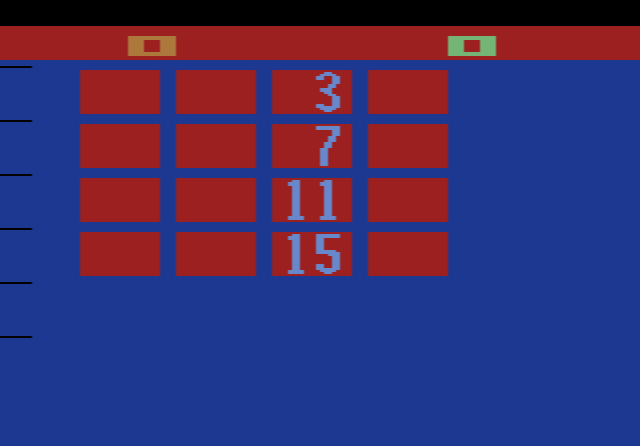
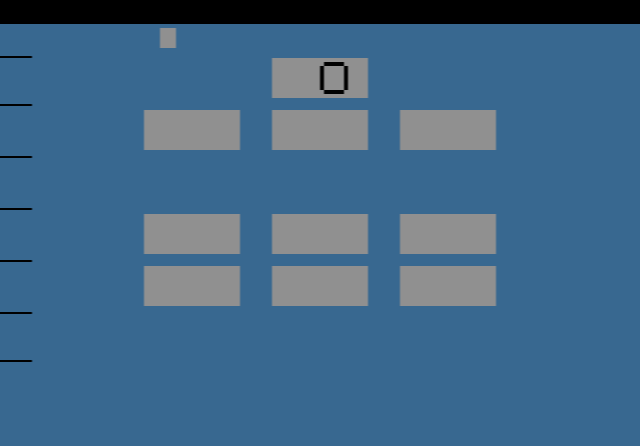
The game works like an old card-guessing experiment. Two to four cards appear, and you try to “sense” which one is correct. Press the button without highlighting a card to pass and get a new set. The first to 20 points wins. The 24 game numbers combine the number of cards, a two-player “Race” mode, pictures or plain colours on the cards, and a “Past” or “Future” setting that decides whether the computer picks the right card before or as you choose. Since the outcome is pure chance, it gets repetitive quickly, but the large, detailed card pictures with their fade-in effect are unusually good for the 2600.
Why it was never released
The concept, originally called Mind Race, was pitched to Atari by a physicist who researched ESP and a writer on psychic topics. Shannon has said he was sceptical from the start, that nobody on the team could find a way to make it fun, and that the project was dropped after a couple of months. The MindLink itself actually read muscle movements in the forehead, not brain waves. For years the game was known only from lists of planned MindLink titles, until collector Matt Reichert found a copy of the prototype.