In 1982 the Atari 2600 was in millions of homes and the home video game business looked unstoppable. By 1985 most of the companies making games for it were gone, Atari had been sold off, and many shops no longer wanted video games on their shelves. This is the story of the crash, told through the cartridges that were on sale at the time. Most of them are on this site, so you can play the boom and the bust for yourself.
Atari on top
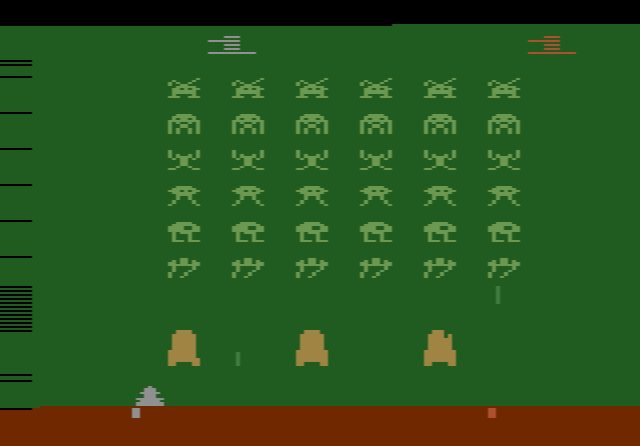
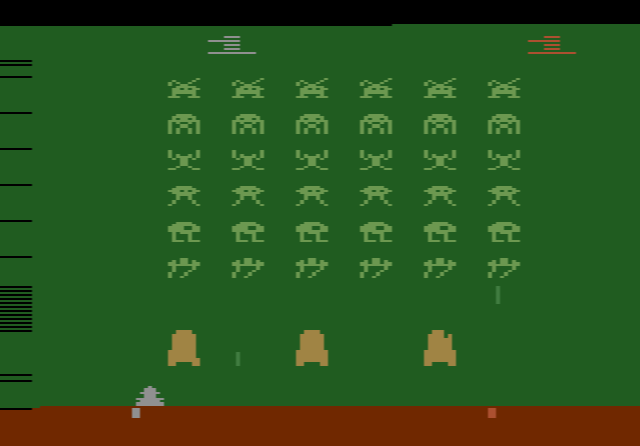
The Atari VCS (renamed the Atari 2600 in late 1982) came out in 1977 and sold only modestly at first. What changed that was Space Invaders. Atari licensed Taito’s arcade hit, and after it arrived in 1980, sales of the console quadrupled. It was the first home game to sell more than a million copies.
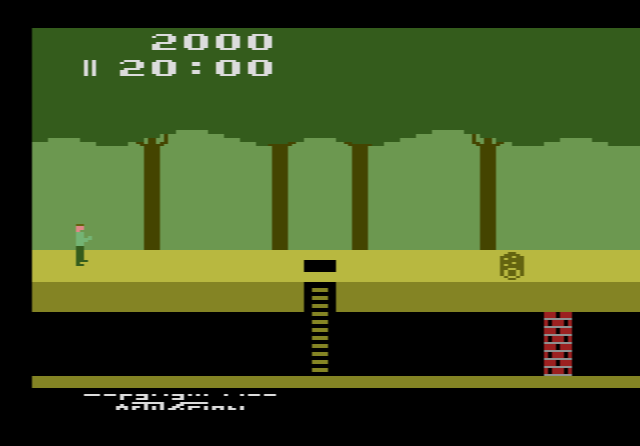
Rival consoles followed: the Odyssey², the Intellivision, the ColecoVision, the Atari 5200 and the Vectrex. Even so, in 1982 the 2600 still held about 58% of the hardware market, against roughly 17% for the ColecoVision. The 2600 had one more thing the others lacked: a big range of games from outside companies. That began in 1979, when four of Atari’s own programmers left to found Activision. Atari sued, the case ended in a settlement with Activision paying royalties, and from then on anyone could see that selling games for someone else’s console was legal and very profitable. Activision’s Pitfall! alone sold more than four million copies.
Too many games, too many companies
Activision’s success brought in dozens of copycats, many of them funded by venture capital and staffed by people who had never made a game. David Crane, one of Activision’s founders, said the number of third-party companies jumped from 3 to 30 between two consumer electronics shows. At the summer 1982 show, 17 companies announced 90 new 2600 games between them. In June 1982 there were about 100 games for the console on the market; by December there were more than 400. Crane later called many of them “the worst games you can imagine”.
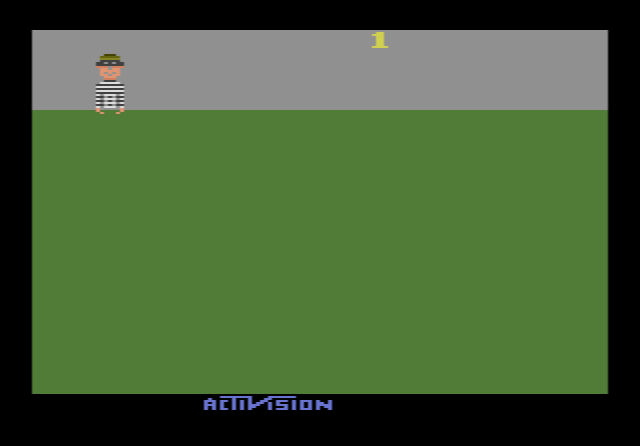
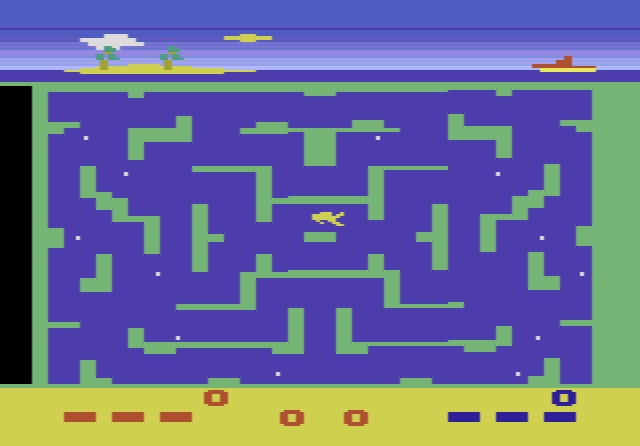
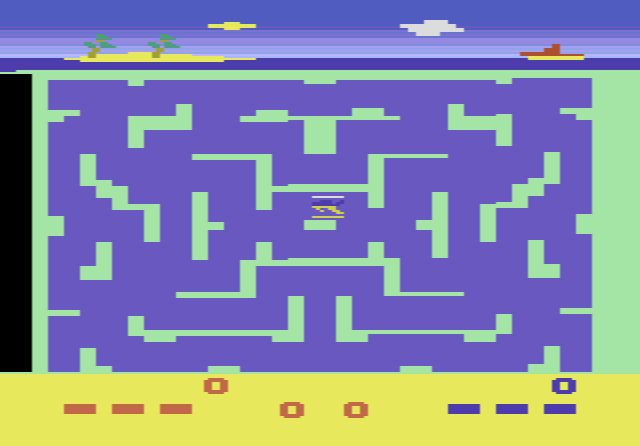
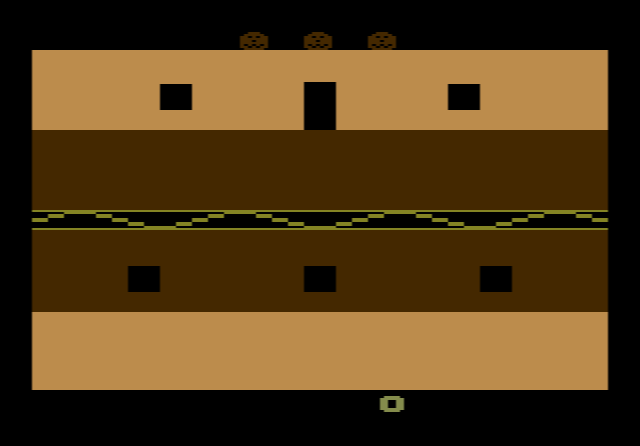
Games by Apollo, a small company from Texas, shows how it went. Its founder, Pat Roper, had no background in games and openly tried to copy Activision; a former programmer quoted him as saying that if Activision had sold $26 million in its first year, Apollo would sell $27 million. The sales never came. Apollo’s Lost Luggage took about four weeks to make and was criticised as a weaker version of Activision’s Kaboom!. Its shark maze game had to be renamed from Lochjaw to Shark Attack after MCA, the owner of the Jaws films, threatened to sue. Apollo filed for bankruptcy protection in November 1982, before the crash had properly started.
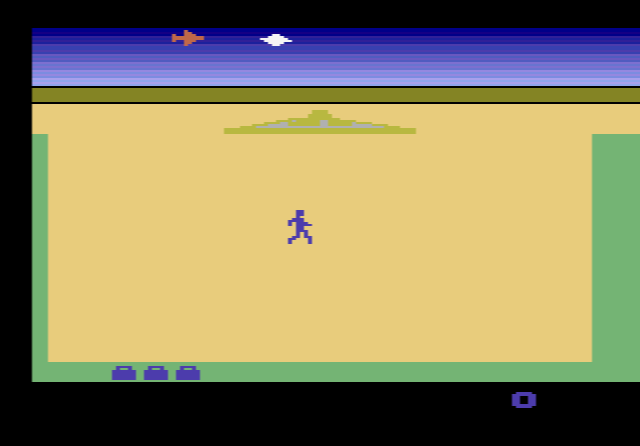
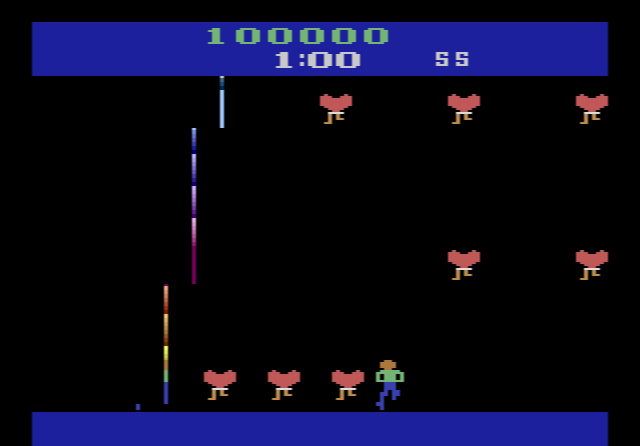
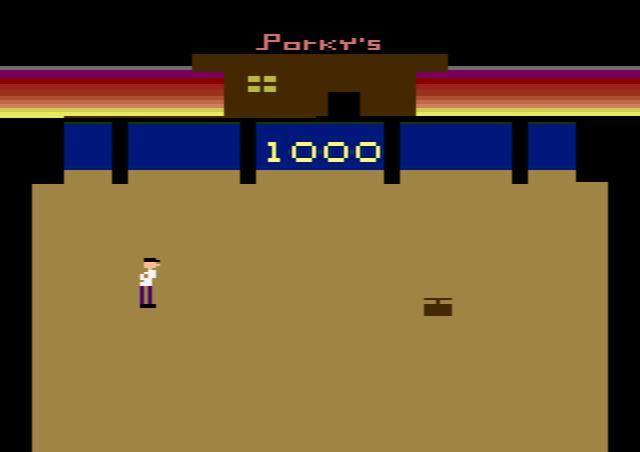
Licences were everywhere. In January 1983 the games writer Bill Kunkel complained that companies had “licensed everything that moves, walks, crawls, or tunnels beneath the earth”. Data Age spent a reported $4.5 million on TV advertising for Journey Escape, starring the rock band Journey; it fell well short of the three million sales it was expected to reach, and Data Age went bankrupt. Wizard Video, a home video label, turned two horror films into The Texas Chainsaw Massacre and Halloween. Many shops refused to stock them, and those that did often kept them behind the counter. 20th Century Fox even made a game out of the teen comedy Porky’s.
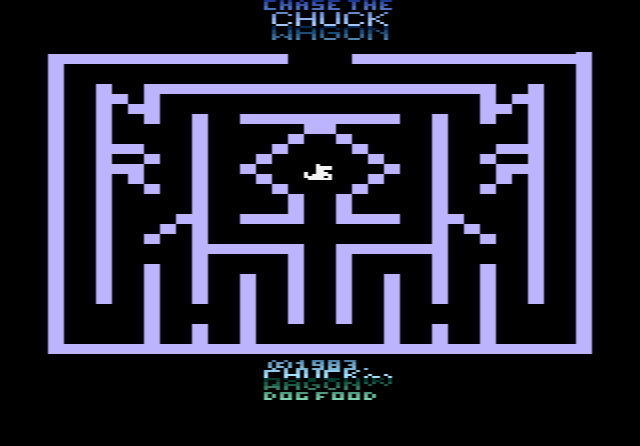
Food and drink companies joined in too. Purina offered Chase the Chuck Wagon by mail order in exchange for proofs of purchase from dog food bags. Its programmer, Mike Schwartz, later said he put it together in about three days, and the unshipped cartridges were destroyed after the promotion flopped. Johnson & Johnson did the same with Tooth Protectors, a Kaboom!-style game about saving teeth from snacks, and Mattel’s M Network made Kool-Aid Man, first sold by mail order and later in shops. Coca-Cola had Atari turn Space Invaders into Pepsi Invaders, a joke at its rival’s expense, and gave just 125 copies to staff at a 1983 sales convention.
Pac-Man and E.T.: Atari’s big bets
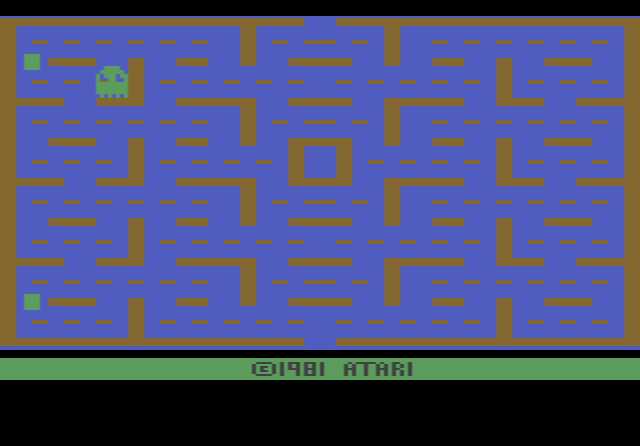
Atari itself made two huge bets in 1982. The first was Pac-Man, released in spring 1982 with heavy promotion. It sold more than a million cartridges in its first month and over 7 million that year, making it the best-selling home video game up to that point. But critics hated its flickering ghosts and its poor likeness to the arcade game, and sales had slowed by the summer, leaving large piles of unsold copies. You will often read that Atari made 12 million Pac-Man cartridges when only about 10 million consoles existed. That figure is widely repeated, but other sources give different numbers for both production and console sales, so treat it with care.
The second bet was E.T. the Extra-Terrestrial. Warner, Atari’s parent company, reportedly paid $20–25 million for the film licence. Howard Scott Warshaw was given the job on 27 July 1982 and had to finish by 1 September, just over five weeks. The game sold more than 2.6 million copies by the end of 1982, but hundreds of thousands were returned in 1983. The size of the loss depends on who you ask: Atari’s CEO Ray Kassar said about 3.5 million of the 4 million made came back, while other accounts say 5 million were made and 1.5 million sold. All sources agree it was a financial disaster for Atari. There is more on the game, and on what really happened to the unsold cartridges, in our article on the E.T. landfill and the 2014 dig.
Atari’s sales methods made things worse. Confident of strong demand, it had told distributors in 1981 to place all their 1982 orders at once. When sales slowed, those distributors simply sent large amounts of stock back.
December 1982: the bubble bursts
Atari had been expected to grow by around 50% in 1983. On 7 December 1982 it announced that its earnings had grown by only 10–15%. The next day Warner’s share price fell by about a third, and video game shares across the market dropped with it. Imagic, one of the stronger third-party publishers, pulled its planned stock market launch that month.
Then the unsold stock hit the shops. When small publishers folded, retailers could not send their games back, so they cut the prices. Games that had sold for $35 ended up in bargain bins for $5, which also hurt the good publishers, because buyers picked the cheap cartridges instead. Atari’s share of the cartridge market fell from 75% in 1981 to under 40% in 1982. At the same time, home computers were getting cheaper. Commodore cut the price of the Commodore 64 to $300 in June 1983, and its VIC-20 adverts, fronted by William Shatner, asked “Why buy just a video game from Atari or Intellivision?”
1983 to 1985: the fallout
Atari lost $536 million in 1983. By mid-year it had laid off 30% of its 10,000 staff and moved manufacturing to Hong Kong and Taiwan. In September 1983 it quietly buried truckloads of stock from its El Paso plant in a landfill in Alamogordo, New Mexico. In July 1984 Warner sold Atari’s consumer business to Jack Tramiel, the founder of Commodore, and kept the arcade side.
The rest of the industry suffered too. North American Philips closed its video game business, Mattel sold off its Intellivision division, and Imagic was liquidated in 1986. Activision survived, but its quarterly revenue fell from $50 million in mid-1983 to about $6–7 million by the end of 1984, and its staff shrank from around 400 to 95. It moved into home computer games to stay alive.
US home video game sales, around $3 billion at their peak, fell to about $100 million in 1985, a drop of almost 97%. (Sources differ on whether the peak came in 1982 or 1983.) In Japan, where the crash became known as the “Atari shock”, Nintendo and Sega had both launched new consoles on 15 July 1983. When Nintendo brought its console to North America in 1985, it called it the Nintendo Entertainment System, a “control deck” that took “Game Paks”, partly because many shops no longer wanted anything called a video game system.
Was it really E.T.’s fault?
E.T. is often blamed for the crash, but the picture is more complicated. The industry was already slowing before the game came out, and outside Atari itself, E.T. did little to cause the collapse. Warshaw has argued that Atari’s business practices did more damage than any single game, and IGN’s Travis Fahs put Atari’s problems down to overestimating how long 2600 sales would last. The real causes were more basic: far more cartridges made than anyone could buy, a console with no way to stop anyone from publishing for it, and cheaper computers arriving at the same time.
Nintendo drew its own conclusions. In 1986 its president Hiroshi Yamauchi said Atari “collapsed because they gave too much freedom to third-party developers and the market was swamped with rubbish games”. The NES had a lockout chip, publishers were limited in how many games they could release each year, and approved games carried the Nintendo Seal of Quality. Every major console since has used some form of that control.
The 2600 did not die
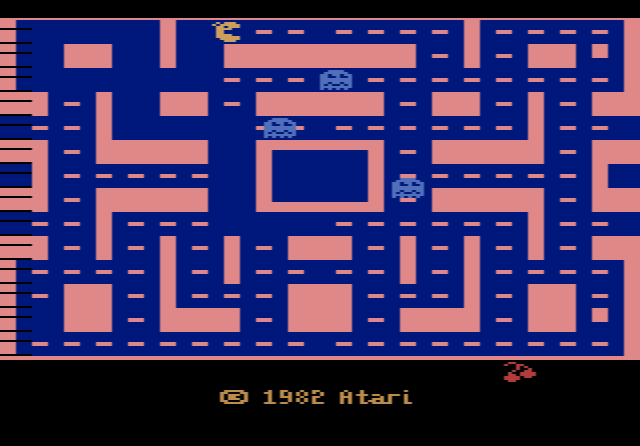
By mid-1984, only Atari and Activision were still making new 2600 games. But the console survived. Well-made games such as Ms. Pac-Man, a much better conversion than the first Pac-Man, still sold. In 1986 Tramiel’s Atari Corporation launched a smaller, cheaper 2600, advertised at “under 50 bucks”, and new cartridges kept coming, such as Activision’s Kung-Fu Master in 1987. Production of the 2600 finally ended in 1992, and an estimated 30 million had been sold in total.
Play the boom and the bust
- Pitfall! – the kind of game the copycats hoped to match
- River Raid – another Activision hit that kept selling in 1983
- Pac-Man – the huge seller everybody complained about
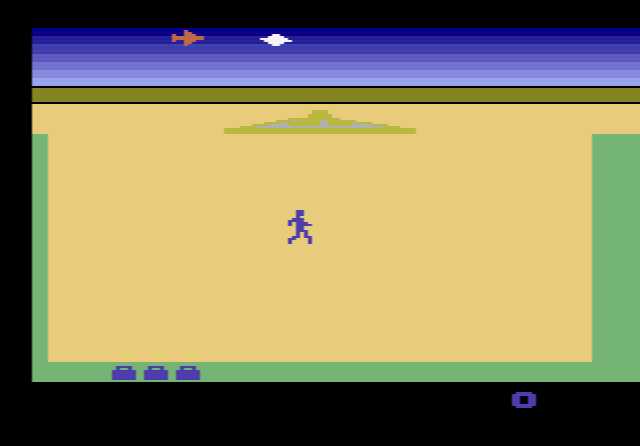
- E.T. the Extra-Terrestrial – try it and decide if it deserves its reputation
- Journey Escape – a rock band licence with a very large advertising budget
- Lost Luggage – one of the many catching games that followed Kaboom!
- Dishaster – a plate-spinning game often named as a typical crash-era release
- Chase the Chuck Wagon – the dog food promotion, now a collector’s prize
- Pepsi Invaders – Coca-Cola’s in-house joke