When you open a game page on AtariOnline.org, a small program starts in your browser and acts like an Atari 2600. It runs the same code that was on the cartridge in 1980, and the game has no way of telling that no console is there. This article explains what that program does, why people put so much work into keeping old games playable, and where this site stands on game files and copyright.
What an emulator actually does
An emulator is software that copies the behaviour of another machine’s hardware, so that software written for that machine can run on a different one. For the Atari 2600 that means copying three chips. The 6507 processor, a cheaper version of the 6502, runs the game’s code at about 1.19 MHz. The TIA (Television Interface Adaptor) draws the picture and makes the sound. The RIOT chip holds the console’s entire 128 bytes of RAM, reads the joysticks and switches, and keeps time.
The fourth piece is the cartridge. Inside the plastic case is a circuit board with a memory chip holding the game’s program. Reading that chip and saving its contents as a file is called dumping, and the file is usually called a ROM image. An emulator loads that file into its virtual cartridge slot and starts its virtual processor, just as the real console did when you switched it on.
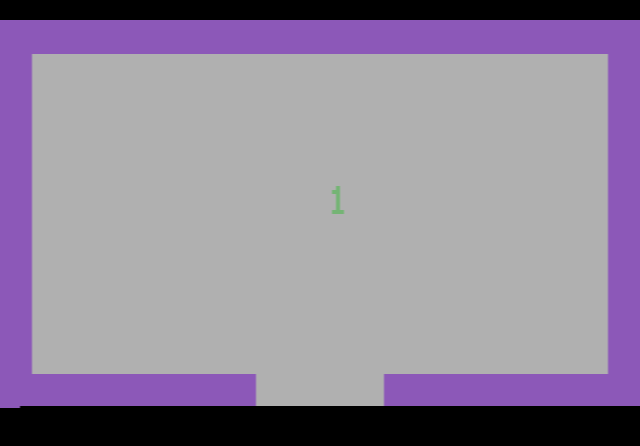
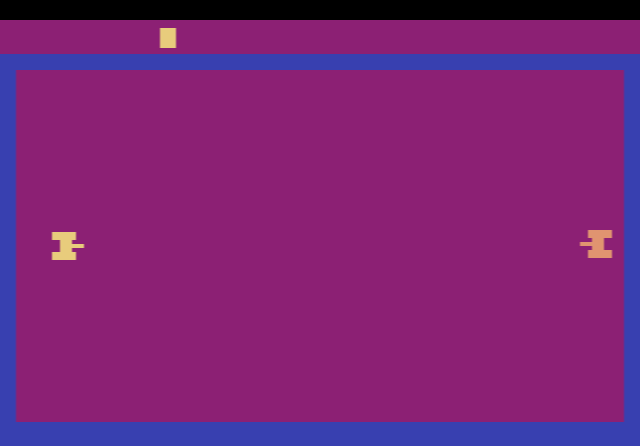
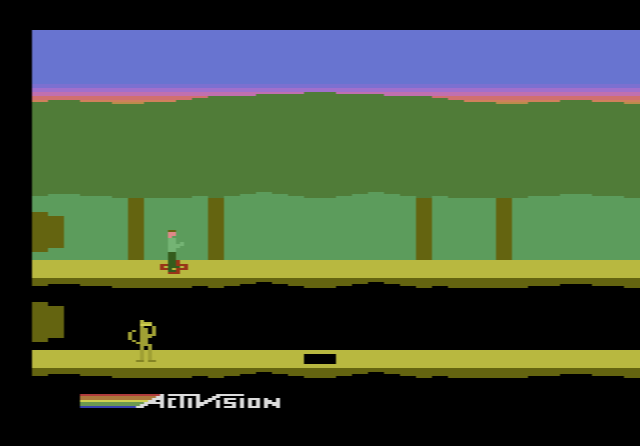
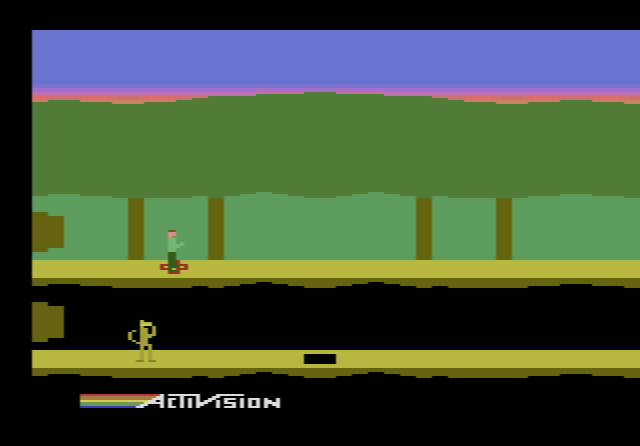
That sounds simple, and in one sense the 2600 is a friendly machine to emulate: it has very little memory and only a handful of chips. The difficulty is timing. The console has no memory to hold a finished picture, so games draw the screen line by line while the TV’s electron beam moves, and many depend on an instruction landing at an exact moment. An emulator that is slightly off will show flicker, torn graphics or a game that will not start. Cartridges add their own complications. The launch games of 1977, such as Combat, fit in 2 KB. Later games like Asteroids used bank switching to swap extra memory in and out, and Pitfall II: Lost Caverns carried an extra chip on the cartridge board that helped with the graphics and made four-voice music possible. An emulator has to recognise each of these tricks and copy them too.
Atari 2600 emulation has a long history. Stella, the best-known 2600 emulator, was first released by Bradford W. Mott in May 1996 and is still maintained today. It takes its name from “Stella”, the codename the console had during development. The emulator on this site is a different one, Javatari, written in JavaScript so that it runs inside a web page.
Why game preservation matters
Games are fragile in ways that books and films are not. A game needs working hardware, a working cartridge and, for many games, a working TV that accepts the old signal. Consoles break, and the people who know how to repair them get older. Once the last working copy of a game is gone, its code is gone with it.
The problem is bigger than most players think. In July 2023 the Video Game History Foundation and the Software Preservation Network published a study of 1,500 randomly chosen games released in the United States before 2010. They found that only 13% were still commercially available. The other 87% could only be played by finding the original hardware and software, or by other means. Those headline figures cover all platforms, not the Atari 2600 alone, but the 2600 library shows the same problem: many of its games came from small companies that left the business in the 1980s.
Some 2600 games show how much depends on a single surviving copy:
- Unfinished and unreleased games. Many games were cancelled during the 1983 crash and survived only as prototype boards. Saboteur, by Howard Scott Warshaw, and Aquaventure were never sold in the 1980s. Both were later included on Atari Flashback consoles, and in November 2021 Atari announced them in November 2021 as cartridges under its “Atari XP” label, together with Yars’ Return.
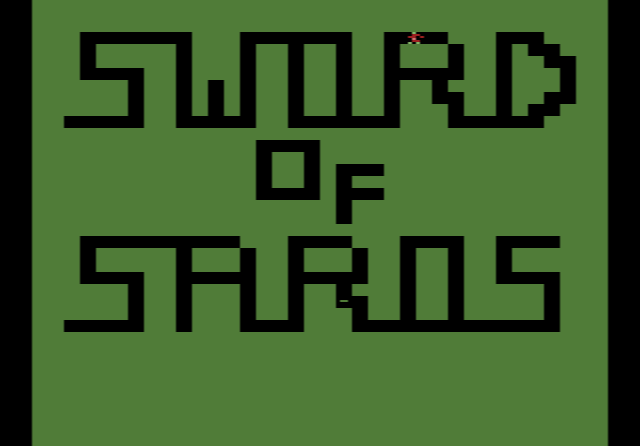
- Games on tape. Starpath’s Supercharger plugged into the cartridge slot and loaded games from an ordinary cassette recorder. Games like Sword of Saros and The Official Frogger were sold on audio cassettes. A group of fans known as the CyberPuNKs later put NTSC and PAL versions of most Supercharger games on a CD called “Stella Gets a New Brain”.
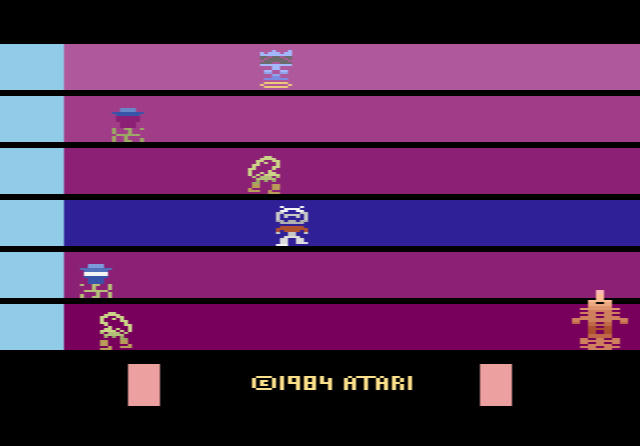
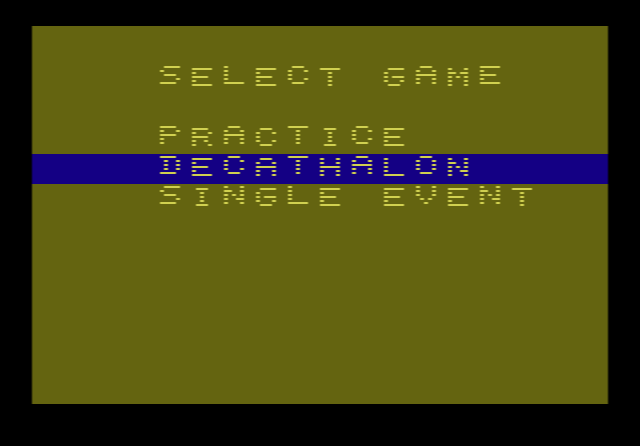
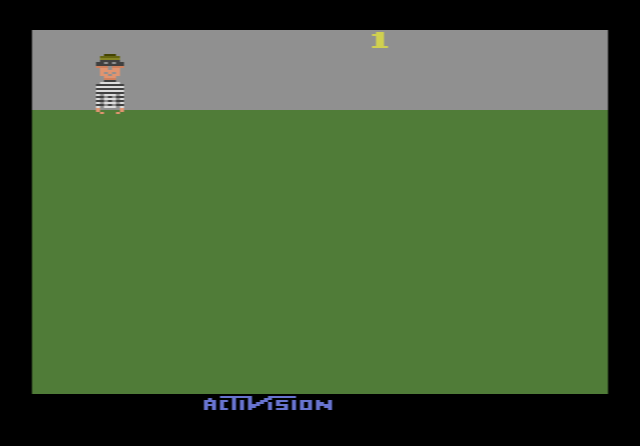
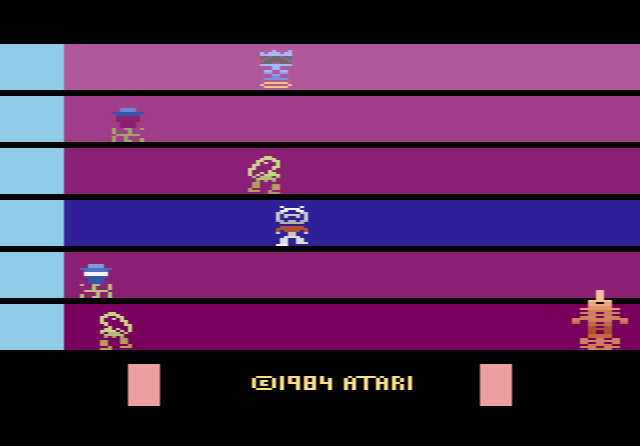
- Games that became something else. Starpath was still working on Sweat! The Decathlon Game when the company was sold to Epyx in 1984. The game was redeveloped for the Commodore 64 as Summer Games. The 2600 version survived as a prototype.
What emulation cannot preserve
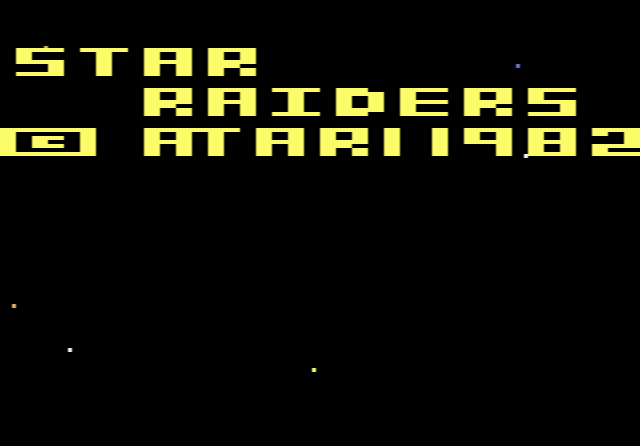
An emulator preserves the program, not the whole experience. The paddle dial that made Kaboom! so quick becomes arrow keys or an analog stick. The picture looks sharper on a modern screen than it did on a 1980s TV. Some hardware is simply missing: the emulator here has no keypad controller, so Star Raiders, which came with the Video Touch Pad keypad for its galactic map, hyperwarp and view changes, is only partly playable in the browser.
The things around the game matter too. Manuals often held the rules and the story, and boxes and catalogues show how games were sold. Collectors and sites like AtariAge have scanned thousands of them, and physical collections keep the originals. Emulation is one part of preservation, not the whole of it.
Copyright, preservation and the law
Old games are not free of copyright just because they are old. Someone usually still owns the rights to them: the original company, a company that bought it, or the people who made the game. How copyright law treats emulators, game files and preservation depends on the country, and the rules are not the same in the United States, the European Union or elsewhere. This article is not legal advice, and it does not try to say what is allowed where you live.
One example shows how narrow the official rules can be. In the United States, the Copyright Office reviews exemptions to the law against getting around copy protection every three years. The October 2024 rules renewed an exemption for eligible libraries, archives and museums. They may get around the protection on games they own, where the games are no longer reasonably available for sale, in order to keep the games playable for preservation. The exemption has conditions. The work must be non-commercial, and the preserved game must not be made available outside the institution’s own building. Preservation groups asked for remote access so that researchers could play preserved games from home. The Register of Copyrights did not recommend it, and pointed to the risk of harm to the existing market for older games. So even in this case, the official exemption covers institutions and on-site access. It does not cover general public access over the internet.
Rights holders also bring their own games back. Digital Eclipse’s Atari 50: The Anniversary Celebration (November 2022) presents Atari games, including many 2600 titles, inside an interactive documentary on modern consoles and PC. The Atari 2600+ (November 2023) is a smaller replica console that uses software emulation to play most original 2600 and 7800 cartridges on an HDMI TV. If you want to own these games or support the companies that hold the rights, official releases like these are one option.
Where AtariOnline.org stands
This site is an independent project, and it works like this:
- Games are playable in the browser only. Each game page loads the game into the emulator so you can play it. There is nothing to install.
- ROM files are not offered for download. There are no download links on the site, and direct requests for the game files from outside the game pages are blocked.
- Each game has its own page with context. Where we can, we describe who made the game, how it plays and what is known about its history, so the page is more than a file in a list.
- Rights holders can ask for removal. If you own the copyright to a game on this site and want it taken down, use the contact form and choose the DMCA topic. Please name the game and tell us what rights you hold.
We also use the same contact form for corrections. If a game page gets a fact wrong, such as a date, a programmer’s name or a control, tell us which game it is and where the correct information comes from.
See preservation for yourself
If you want to see why these games are worth keeping, start with Adventure, the most-rated game on the site and home of one of the first widely known Easter eggs. Then try Pitfall! to see how far programmers pushed the hardware within a few years. Try Saboteur to see a game players could not buy in the 1980s, and Sweat! to see the game that Starpath was still working on when the company was sold. Each of them runs on a console that is no longer made, using code dumped from a chip decades after it was made.