Over fifteen years Atari built the 2600 in half a dozen different shells, and Sears sold several more under its own name. Collectors have nicknames for all of them: the Heavy Sixer, the Light Sixer, the Woody, the Vader and the 2600 Jr. They all play the same cartridges, but they differ in weight, switches, packaging and how easy they are to find today. This guide goes through every official model, the Sears and Japanese versions, the prototypes that never shipped and the machines that could play 2600 games without being 2600s. Along the way we link to games that belong to each era, so you can play them here.
The models at a glance
| Nickname | Model | Introduced | Front switches | How to spot it |
|---|---|---|---|---|
| Heavy Sixer | CX2600 | 1977 | 6 | Thick, curved side moulding; noticeably heavy; made in Sunnyvale |
| Light Sixer | CX2600 | 1978 | 6 | Thinner, more angular moulding; lighter |
| Four-switch (“Woody”) | CX2600-A | 1980 | 4 | Woodgrain front, difficulty switches on the back, labels in capitals |
| Vader | Atari 2600 | 1982 | 4 | All black, no woodgrain, first to say “2600” |
| 2600 Jr. | Atari 2600 | 1986 | – | Small, flat, silver trim with a rainbow stripe |
1977: the Heavy Sixer
The first Atari Video Computer System was built in Sunnyvale, California, during 1977. Its case used thick plastic to make it feel solid, even though it is mostly empty inside, and it had heavy metal shielding. The Sunnyvale moulds even had mounts for built-in speakers, which were dropped as too expensive; the sound went to the TV instead. All six switches sat on the front: power, TV type (colour or black and white), left and right difficulty, Game Select and Game Reset.
How to tell one apart: according to AtariAge, a Heavy Sixer has extra plastic moulding around the back and sides, a tag on the underside naming the Sunnyvale plant, and a serial number that matches a sticker on its box. Wikipedia adds that it came with a grey power supply and spring-loaded joysticks. Collectors say Heavy Sixers give better colour than later models, and they are considered rare because they were made for only about a year. Some six-switch consoles also have a small channel 2/3 switch in a hole underneath; those without it output only on channel 3.
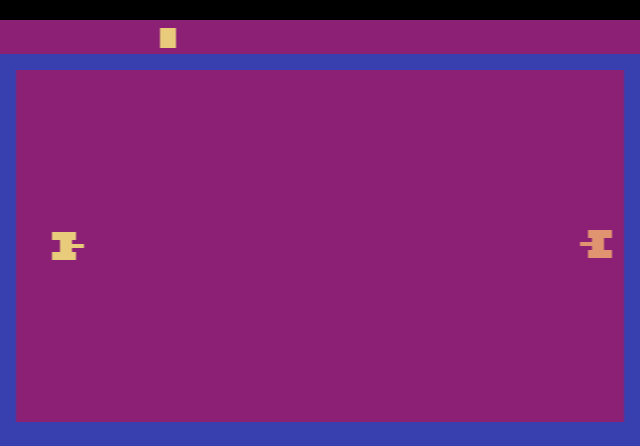
Atari’s own consoles came with Combat in the box, and the launch shelf held games such as Video Olympics, played with the paddles, and Indy 500, which was packed with the driving controllers.
1978: the Light Sixer
In 1978 production moved to Asia. Wikipedia says Taiwan and AtariAge says most units were made in Hong Kong, so the country depends on the source. The new model used thinner plastic and lighter shielding. It still has six switches on the front, but the side and front moulding is thinner and more angular, and on the front corners it overlaps the woodgrain. It stayed in production for about two years.
1980: four switches
In 1980 the CX2600-A moved the two difficulty switches to the back of the console, next to the controller ports, and made them smaller. That left four switches on the front, and the labels changed from lower case to capitals. Inside, the two circuit boards joined by a ribbon cable became a single board, which is why the controller ports moved higher up the back. The channel switch, optional before, now came on every North American console. Some early units reused the Light Sixer’s lower case, with thin plastic stuck over the holes that were no longer needed.
Two details for collectors. AtariAge describes a promotional version with yellow instead of orange piping around the switches, made in Sunnyvale and packed in a box stamped “Not for Resale”. And Atari’s own field service manual lists several board revisions: from revision 16 onwards a timer chip was added to the reset circuit to cure power-on reset failures, something worth knowing if an old console refuses to start a game.
1982: the Vader
When Atari launched the 5200 in November 1982, the VCS was renamed the Atari 2600, after its part number CX2600. The name first appeared on an all-black version of the four-switch console without any woodgrain. Fans call it the “Vader”, after the Star Wars villain. AtariAge says it came in a silver box with two joysticks, Combat and Pac-Man, and also in a smaller silver box with one joystick and no games.
The Sears Video Arcade family
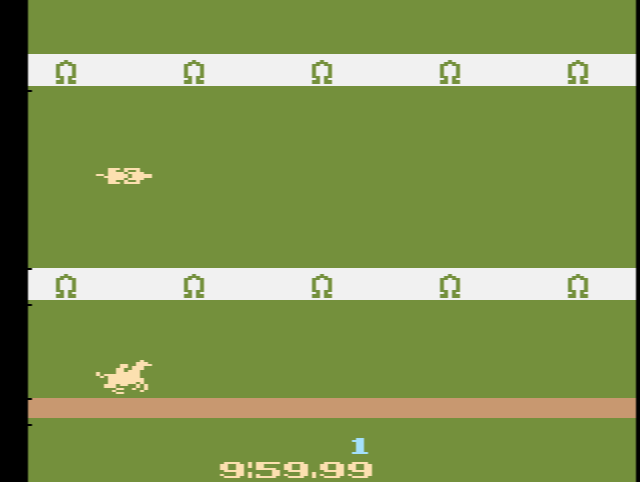
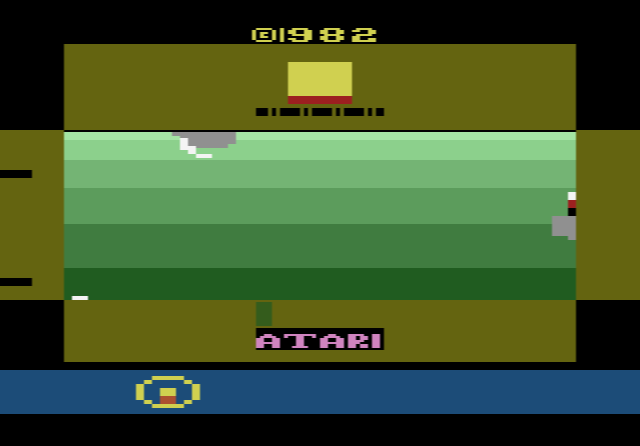
Sears had sold Atari’s home Pong under its Tele-Games brand since 1975, and it did the same with the VCS, calling it the Video Arcade. There were Sears versions of the Heavy Sixer, the Light Sixer and the four-switch model. On the Sears Heavy Sixer, for example, “Tele-Games” is printed above the cartridge slot and a label underneath says the unit was made by Atari for Sears, Roebuck and Co. Sears usually gave Atari’s games new names too, and it had three games of its own that Atari never sold: Steeplechase, Stellar Track and Submarine Commander.
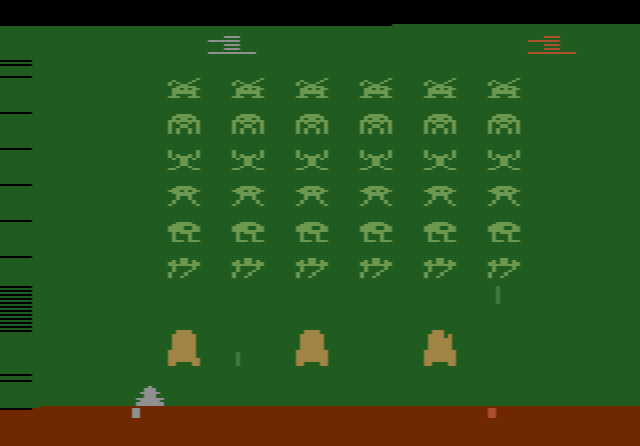
The last Sears model, the Video Arcade II from late 1982, looks completely different. It is a low wedge shape with flat switches and LED lights, and its controllers combine an eight-way joystick with a paddle. It came with two controllers and Space Invaders.
The Atari 2800 in Japan
That wedge-shaped design was Atari’s own Japanese console, the Atari 2800. It was designed by engineer Joe Tilly, has four controller ports instead of two, and uses combined joystick and 270-degree paddle controllers designed by John Amber. It launched in Japan in 1983, just after Nintendo’s Famicom, and never caught on; AtariAge says very few were made. Its case lived on, though: redesigned by Barney Huang, it became the basis for the Atari 7800.
1986: the 2600 Jr.
After Jack Tramiel bought Atari’s consumer business in 1984, his Atari Corporation relaunched the console in 1986 as a small, cost-reduced model that looked like the 7800. It had been planned two years earlier. Atari never called it the “Jr.” officially, but the adverts promised a price of “under 50 bucks” and “The fun is back!”. AtariAge lists three versions: the first, with a short rainbow stripe on the metal plate; a revised one with a wider rainbow; and an all-black version with a small rainbow that is believed to have been sold only in Ireland. Boxes were silver or red. Later European units came with the CX78 joypad from the European 7800 instead of a joystick.
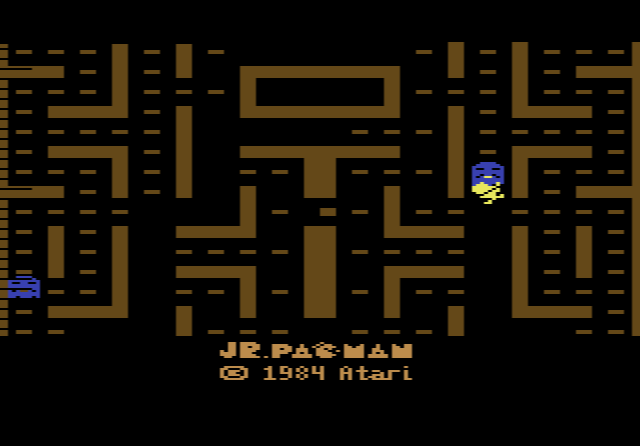
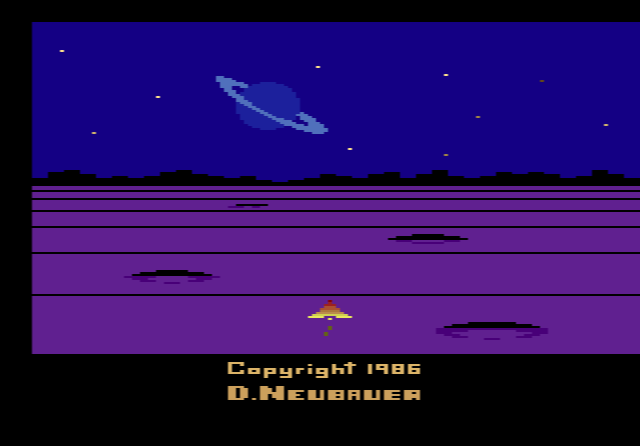
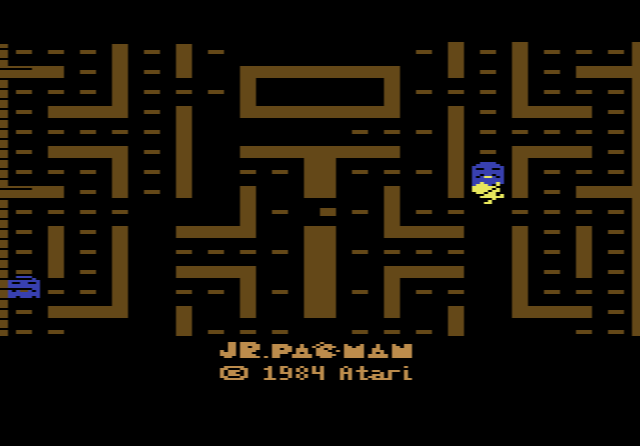
The Jr. era has its own games, many of them finished years earlier and finally released: Jr. Pac-Man and Solaris in 1986, and later titles such as Secret Quest (1989), which uses the TV type switch to call up its status screen, and Klax, released only in PAL form for European players.
Prototypes that never shipped
- Atari 2700: a 2600 with wireless controllers.
- CX2000: a redesign with built-in joysticks, based on a human-factors study by Henry Dreyfuss Associates.
- Atari 2500: a 1981 prototype meant to replace the 2600. It is light grey, sleeker, and has combined joystick and paddle controllers built in, though normal controllers also work.
- Atari 3200: known inside Atari as “Super Stella”, a backward-compatible successor with more memory and better graphics and sound. It ran into technical problems and was dropped in favour of the design that became the 5200.
Playing 2600 games without a 2600
The 2600 was built mostly from standard parts, and its rivals noticed. In 1982 Coleco released Expansion Module #1, which let the ColecoVision play 2600 cartridges using its own copy of the TIA chip. Atari sued for patent infringement, and the case was settled with Coleco becoming a licensee. In 1983 Coleco followed with the Coleco Gemini, a complete 2600 clone with joystick and paddle controllers. It came with Coleco’s version of Donkey Kong. AtariAge also lists the Columbia Home Arcade, a Gemini with a different logo sold through a mail-order club.
Atari’s own consoles caught up later. A 2600 adapter for the 5200 came out in the summer of 1983, but it only fitted the revised two-port 5200 unless the older model was modified. The Atari 7800, released in May 1986, could play almost all 2600 cartridges without any adapter, which made it the first console with built-in backward compatibility. When it runs a 2600 game it uses the same TIA chip and slows its processor to the 2600’s 1.19 MHz.
The latest official model is the Atari 2600+, released in November 2023. It is an 80% scale copy of the 1980 four-switch console, still labelled “Video Computer System”, with HDMI output. It plays most 2600 and 7800 cartridges, but by software emulation rather than original chips, so a few cartridges do not work. It came with a 10-in-1 cartridge that includes Adventure, Haunted House and Yars’ Revenge.
Does the model matter when you play?
For the games themselves, hardly at all. AtariAge describes each official model as functionally the same as the others. The one difference that does matter is the region: NTSC, PAL and SECAM consoles use different versions of the TIA chip, so a cartridge from one region shows wrong colours or a rolling picture on another, and many games exist in separate versions.
What changed from model to model was mostly comfort. On a six-switch console the difficulty switches sit next to Reset; on a four-switch console or a Vader you have to reach round the back. In the emulator on this site every switch is a key, whichever model you grew up with:
- F12: Game Reset
- F11: Game Select
- F4 and F9: left and right difficulty switches
- F2: TV type (colour or black and white)
- Arrow keys and Space: joystick for player 1; T, F, G, H and A for player 2
The TV type switch shows how the hardware and the games drifted apart. It was meant for families with black-and-white sets, but by 1989 Secret Quest used it to show its status screen, and its manual tells 7800 owners to press Pause instead, because the 7800 has a Pause button where the 2600 had its colour switch. Here, F2 does the job on every game.