For thirty years, one of the best-known stories in video games was a rumour: that Atari, ashamed of its E.T. game, had buried millions of unsold cartridges in the New Mexico desert and covered them with concrete. In April 2014 a film crew, a team of archaeologists and about 200 onlookers went to the Alamogordo landfill to find out. Part of the story turned out to be true, and a lot of it didn’t. Here is what happened in 1983, what the dig found, and how you can play the buried games in your browser today.
The game at the centre of the story
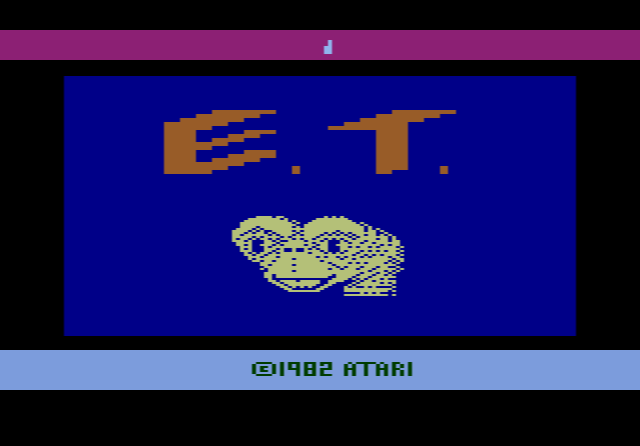
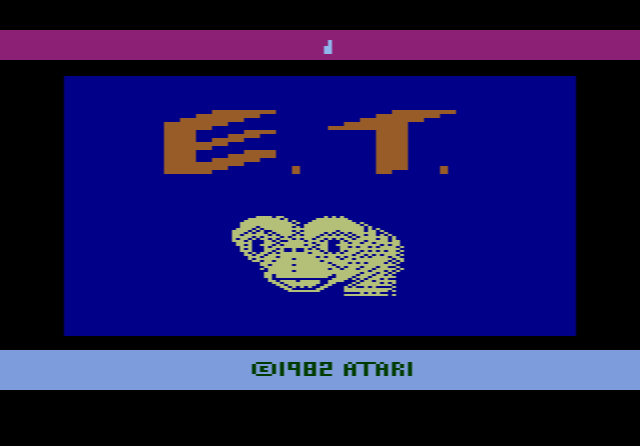
E.T. the Extra-Terrestrial was Atari’s big game for Christmas 1982. Warner, Atari’s parent company, reportedly paid $20–25 million for the rights to Steven Spielberg’s film. Atari’s CEO Ray Kassar was not keen; he is quoted as telling Warner’s chief, “I think it’s a dumb idea.” Howard Scott Warshaw, who had made Yars’ Revenge and Raiders of the Lost Ark, got the job on 27 July 1982 and had to finish by 1 September. When he showed his design to Spielberg, the director reportedly asked, “Couldn’t you do something more like Pac-Man?” Warshaw kept his own idea, and later said Spielberg may have had a point.
The game sold well at first: more than 2.6 million copies by the end of 1982. But Atari had made far more, and the returns came back in 1983. How many were made and how many were left over depends on the source. Kassar put it at 3.5 million returned out of 4 million, while other accounts say 5 million were made and only 1.5 million sold. Either way, Atari was left with a warehouse problem. For the bigger picture, see our article on the video game crash of 1983.
What happened in September 1983
In September 1983, the local paper, the Alamogordo Daily News, reported that between 10 and 20 semi-trailer loads of Atari boxes, cartridges and consoles from an Atari storehouse in El Paso, Texas, were being crushed and buried at the city landfill. On 28 September The New York Times ran the story too, with a figure of 14 truckloads, and an Atari representative confirmed that the material came from its El Paso plant, which was being closed. Another Atari spokesman said it was mostly broken and returned stock, “by-and-large inoperable stuff”.
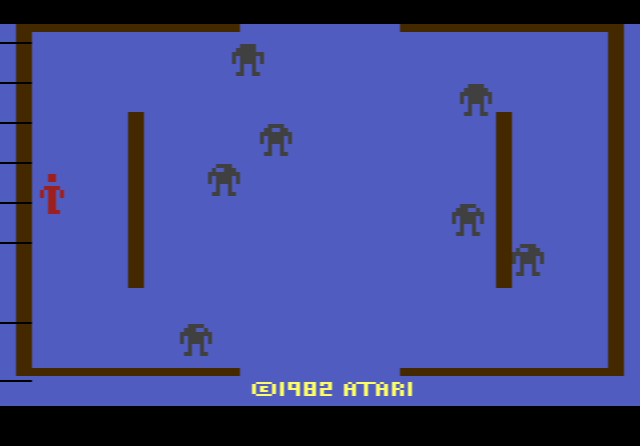
Local kids did not believe that. News reports at the time described children digging into the dump and coming out with cartridges of E.T., Raiders of the Lost Ark, Defender and Berzerk. From 29 September a layer of concrete was poured over the crushed material, which is unusual for household rubbish. The city soon objected to the amount of dumping, and it was stopped.
How it became a legend
The Times article did not say which games were buried, but later retellings linked the dump to E.T., the most famous flop of the time. Over the years the story grew into “millions of E.T. cartridges under concrete”. Because nobody could check, many people called it an urban legend. Warshaw himself said in 2004 that he doubted millions of copies had ever been destroyed. The historian John Wills has suggested that the location helped the myth along: Alamogordo is not far from the Trinity atomic test site and from Roswell, famous for its UFO story.
The 2014 dig
On 28 May 2013 the Alamogordo City Commission gave the Canadian company Fuel Industries six months of access to the landfill to dig for the cartridges and film a documentary. Xbox Entertainment Studios, part of Microsoft, backed the film, Atari: Game Over, directed by Zak Penn. The dig took place on Saturday 26 April 2014 and was open to the public. Warshaw was there, along with Ready Player One author Ernest Cline and local residents, including city official Armando Ortega, who had been one of the kids raiding the dump in 1983. Ortega said he and his friends gave away the E.T. cartridges they found because the game “sucked”.
The machines went down about 30 feet, deeper than planned, and the first remains of E.T. boxes and cartridges turned up within hours. A team of archaeologists led by Andrew Reinhard recorded what came out of the ground. Warshaw told reporters: “It may be a horrible game, but 32 years after, you are here, talking to me about it. It’s a tremendous honor.”
The most useful witness was James Heller, the former Atari manager who had organised the burial. He said Atari asked him in 1983 to find a cheap way to get rid of 728,000 cartridges held in its El Paso warehouse, and that he had the concrete poured after local kids got into trouble scavenging and reporters started calling. That was the real scale: hundreds of thousands of cartridges of many different games, not millions of E.T. cartridges.
What they actually found
About 1,300 cartridges were brought up, a tiny part of what is still down there. The rest was too deep to reach in the single day the city allowed. Published counts of how many different games were found vary, from “more than 40” in Reinhard’s own account to about 60 in other reports. Some were still boxed and shrink-wrapped, some with Target or Wal-Mart price tags. Consoles, controllers and other hardware came up too.
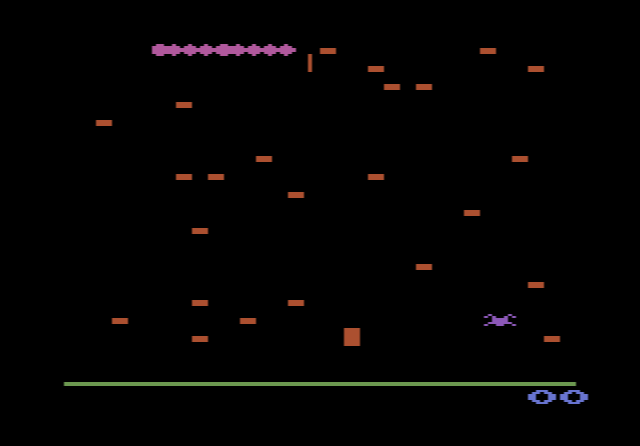
The biggest surprise was that E.T. was not the most common game. According to the count reported by the Alamogordo Daily News, the most common titles were:
| Game | Copies recovered |
|---|---|
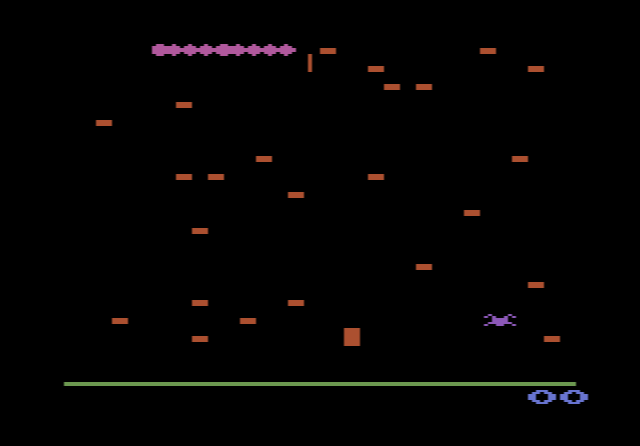
| Centipede | 190 |
| E.T. the Extra-Terrestrial | 171 |
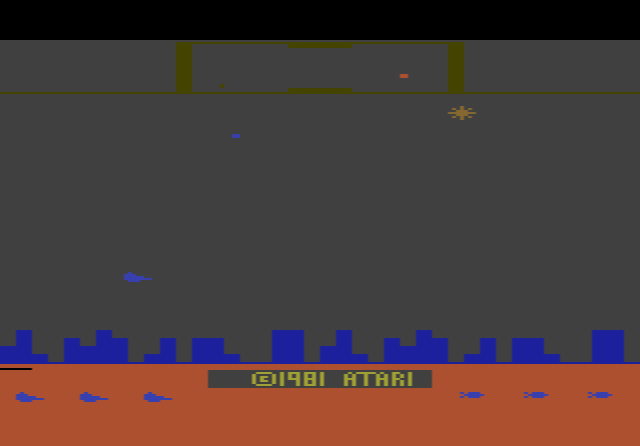
| Defender | 116 |
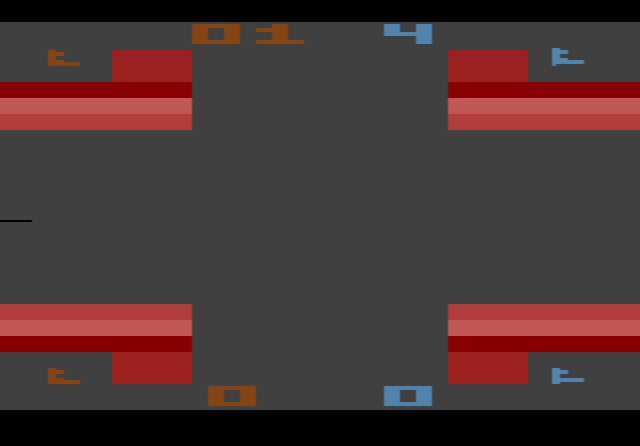
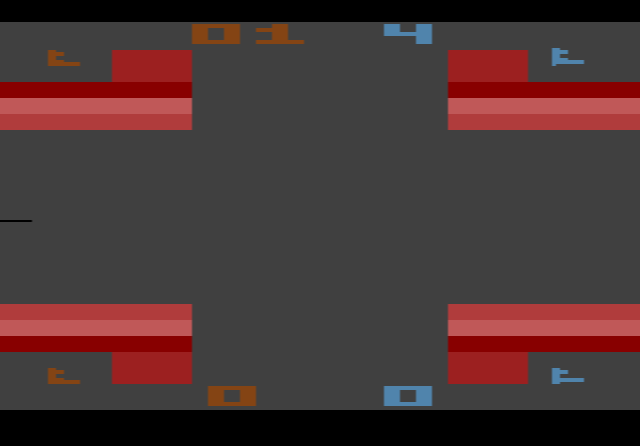
| Warlords | 99 |
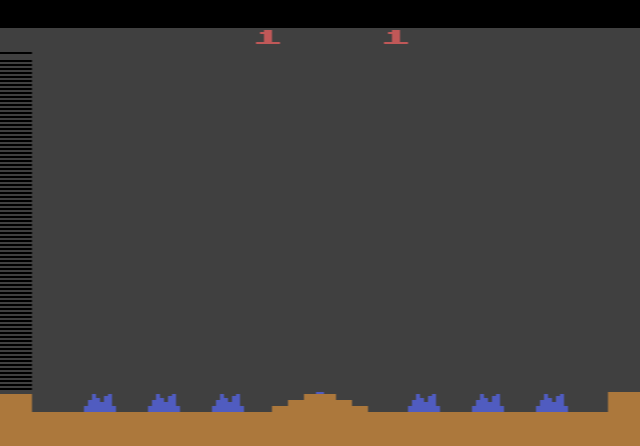
| Missile Command | 59 |
| Asteroids | 53 |
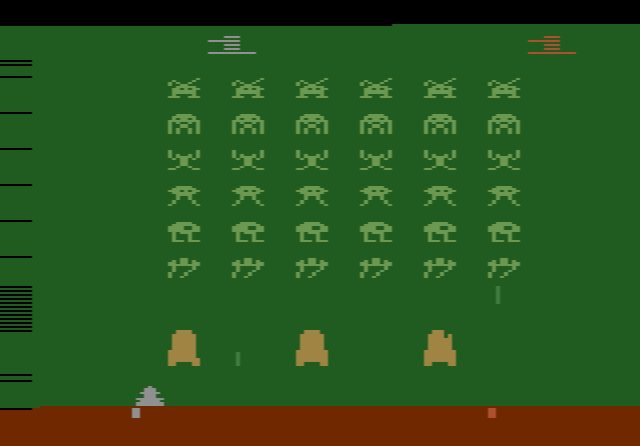
Other reported finds included Space Invaders, Phoenix, Super Breakout, Star Raiders and a Swordquest game. Marty Goldberg, co-author of a history of Atari, described the dump as a clearing-out of the Texas plant’s unused stock of many titles, plus console and computer parts, and that fits what came out of the ground.
Myth and truth side by side
| The story | What the evidence shows |
|---|---|
| Atari buried games in the desert | True. It was reported in 1983 and confirmed by the 2014 dig. |
| They were covered in concrete | True. Concrete was poured from 29 September 1983, and Heller said he ordered it. |
| Millions of E.T. cartridges are down there | False. Heller put the total at 728,000 cartridges of many games; later estimates are in the same range. |
| It was all E.T. | False. Centipede was the most common game recovered, with E.T. second. |
| The dump caused, or proved, Atari’s collapse | Partly. It shows how much unsold stock Atari had, but the company’s problems were much wider than one game. |
Where the cartridges went
The city kept about 700 cartridges to sell, 100 went to the film’s producers, and roughly 500 went to museums. In December 2014 the Smithsonian added a dug-up E.T. cartridge to its collection, and in 2015 The Henry Ford museum in Michigan took several cartridges, a video touch pad, landfill dirt and clothing worn by the dig team. The Centre for Computing History in Cambridge, England, also has items on display. The rest were sold on eBay: by November 2014 the city had made more than $37,000, with one E.T. copy selling for over $1,500, and by April 2025 about 880 cartridges had raised more than $107,000. Atari: Game Over was released on Xbox on 20 November 2014.
Is E.T. really the worst game ever made?
Its reputation came later. In 1982 reviews were mixed rather than savage: The Miami Herald thought it was hard to learn but worth the effort, and Vidiot’s reviewer said the only real flaw was E.T. falling back into holes. In a 1984 poll, Softline readers named it the second-worst Atari program of 1983, behind Congo Bongo. The “worst game of all time” label mostly comes from lists written over a decade later.
The pits are the real problem. The game checks collisions pixel by pixel, so if any part of E.T. touches a pit edge, he falls in. That is why fan patches, such as the fixes David Richardson released in 2013, target the pits first. If you play the original here, move around the pits carefully, and use the zone that shows where a phone piece is hidden before you jump into anything. To float out of a pit, hold Space and press the up arrow. Once you know how it works, E.T. is a strange, slow, but quite playable little adventure.
Play the games from the landfill
- E.T. the Extra-Terrestrial – the game the legend was built on
- Centipede – the most common cartridge in the dig
- Defender – found in 1983 by local kids and again in 2014
- Warlords – a four-player paddle game, best with friends
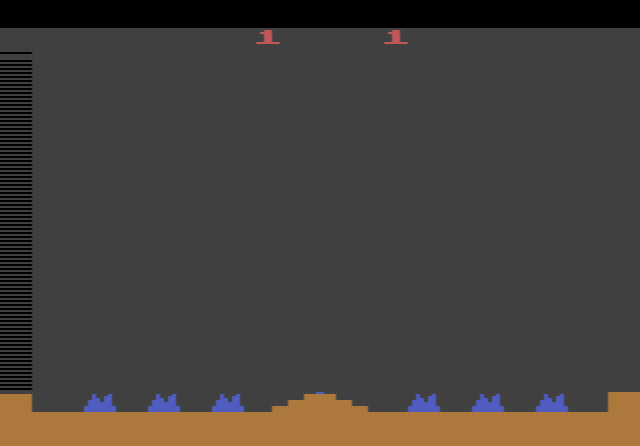
- Missile Command – defend six cities from falling missiles
- Asteroids – one of Atari’s biggest sellers
- Raiders of the Lost Ark – Warshaw’s previous film game, also dug up by the kids in 1983
- Star Raiders – it needs Atari’s keypad controller, which the emulator does not have, so it is only partly playable here