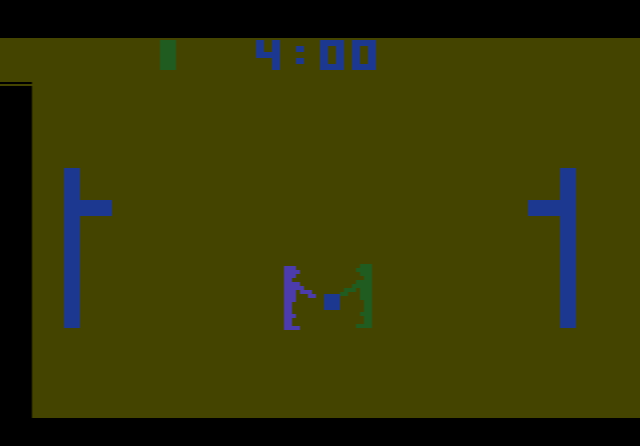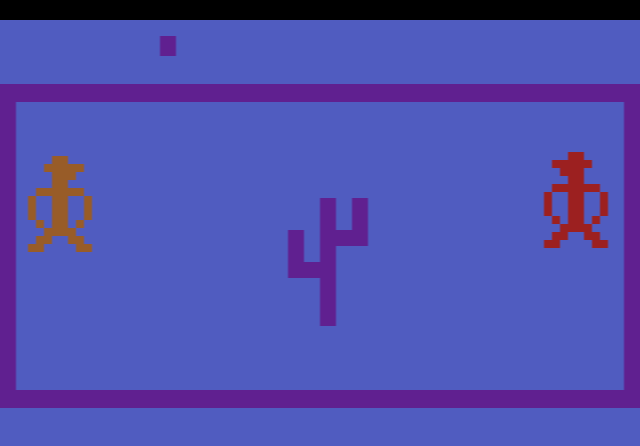
Today it is normal for a game to be made by one company and played on another company’s console. In 1979 nobody did that. If you wanted to sell games for the Atari VCS, you had to be Atari. That changed when four of Atari’s best programmers walked out and started Activision, the first independent console game company. This is how it happened, and which of their games you can play here, from the Atari cartridges they made before they left to the hits that followed.
Four programmers at Atari
David Crane, Larry Kaplan, Alan Miller and Bob Whitehead were among the people who taught the VCS what it could do. Between them they wrote a large part of the console’s early library:
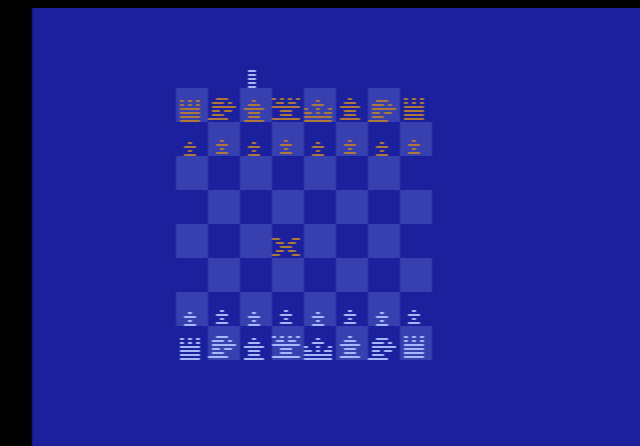
- Bob Whitehead wrote two of the launch games, Blackjack and Star Ship, and co-wrote Video Chess, a game many programmers thought the console could not run.
- Larry Kaplan wrote the launch games Air-Sea Battle and Street Racer, and later Bowling.
- Alan Miller, one of Atari’s first four VCS designers, made Surround, Hangman and Basketball.
- David Crane, who joined in 1977 after Miller told him Atari was hiring, made Outlaw, Canyon Bomber and Slot Machine.
None of their names appeared on the boxes. Atari did not credit programmers publicly, partly to stop rivals from hiring them away, and it did not pay royalties on hit games.
The memo and the meeting
In early 1979 Atari’s marketing department sent round a memo listing the best-selling cartridges of the previous year, to help guide new game ideas. The four noticed that their own games were near the top. Accounts of the exact figures differ: one version says the four were behind about 60% of Atari’s cartridge sales, and Crane has also described it as $60 million out of $100 million in 1978 sales. They were each earning a salary in the tens of thousands of dollars.
The group, by then nicknamed the “Gang of Four”, met Atari’s CEO Ray Kassar in May 1979. They asked to be treated the way record labels treated musicians, with royalties and their names on the games. Kassar had come to Atari from the textile business. Kaplan remembered him calling them “towel designers” and saying that “anybody can do a cartridge”. Crane’s memory is that Kassar told him he was no more important to the games’ success than the person on the assembly line who put the cartridges together. Either way, the answer was no.
Starting a company that had never existed
The four decided to leave, but the usual thinking at the time was that to make console games, you first had to make a console. Their lawyer put them in touch with Jim Levy, a former music industry executive who was raising money to start a software company. Levy liked the plan and helped them raise about $1 million from the venture capital firm Sutter Hill Ventures. They expected Atari to sue, so they included legal fees in the budget.
Crane and Miller left Atari in August 1979, with Whitehead following shortly after. Kaplan also quit in August but did not like the first business plan, and joined at the end of the year. The company was formally founded on 1 October 1979, with Levy as chief executive. It was first registered as Computer Arts, Inc.; the founders also considered VSync, but worried people would not know how to say it. Levy suggested combining “active” and “television”, and the company became Activision. The first work was done from Crane’s home, where the team built its own development system before writing any games.
The first four cartridges
Each founder made one game. Activision showed them at the Consumer Electronics Show in June 1980, and they reached shops that summer (sources give July or August 1980):
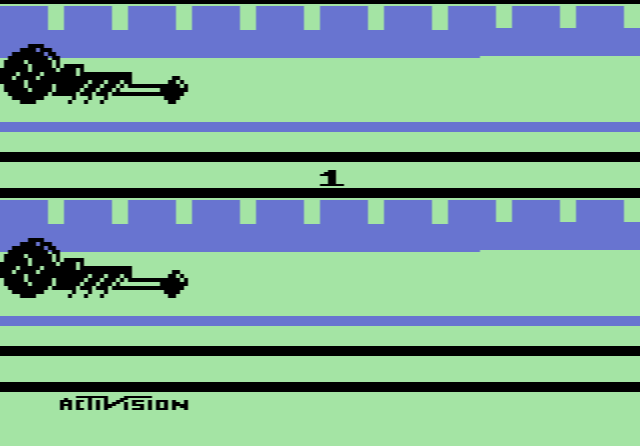
- Dragster by David Crane, a two-player drag race that lasts about six seconds. It sold more than 500,000 copies and brought in over half of Activision’s first-year revenue.
- Fishing Derby, also by Crane, a head-to-head fishing contest with a shark that tries to eat your fish before you can land them.
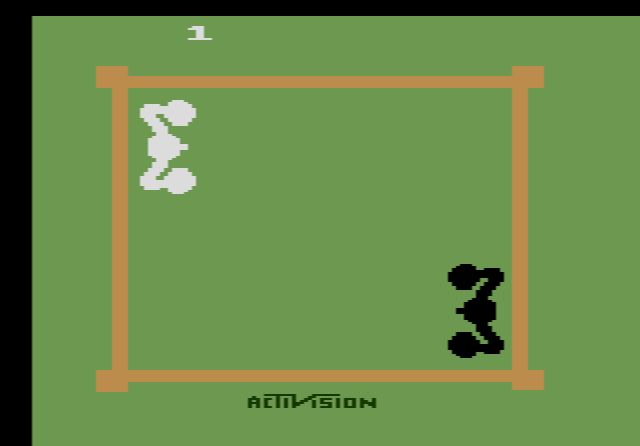
- Boxing by Bob Whitehead, two fighters seen from above in a two-minute bout.
- Checkers by Alan Miller, who tried a 3D board first but dropped the idea because of the limits of the console and the TVs of the time.
Activision also changed how games were sold. Its boxes were brightly coloured and showed a real screenshot on the back. Each manual had a page about the designer. And for most of its games up to 1983, players who reached a target score could send in a photo of their TV screen and receive a cloth patch. The designers were promoted almost like rock stars, which was exactly what Atari had refused to do.
Atari fights back
Atari was not pleased. According to Crane, it used the trade press to describe people who took trade secrets as “evil, terrible people”, and it threatened to stop supplying shops that stocked Activision games. It then sued, claiming the four had taken trade secrets and broken their non-disclosure agreements. Sources disagree on the dates, placing the lawsuit in 1980 and the settlement at the end of 1981 or in 1982. The result is not in doubt: Activision agreed to pay Atari royalties, and in return it could keep selling its games. Outside companies making games for someone else’s console had become legal and normal.
The hits
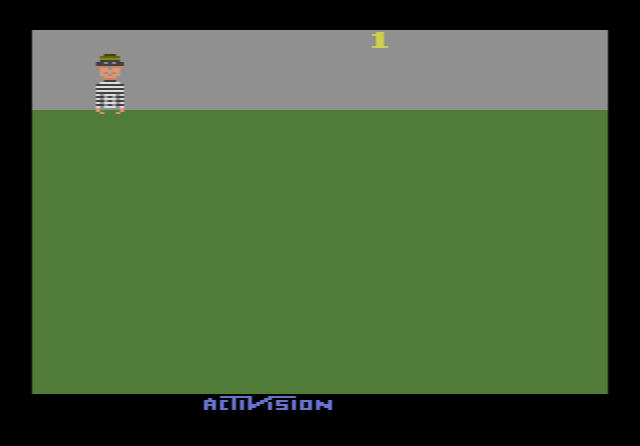
For the first few years each founder made about one game a year. Kaplan’s paddle game Kaboom! (1981), with graphics by Crane, was Activision’s first game to sell more than a million copies. Miller’s Tennis and Ice Hockey, Crane’s Freeway and Whitehead’s Skiing and Stampede followed.
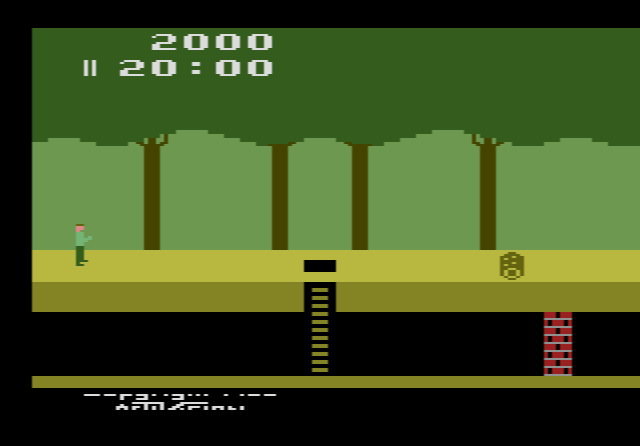
The big one was Crane’s Pitfall!, released in 1982, which sold more than four million copies. Crane had been trying out a running-man animation for years before he found a game to put it in. He later said the design took about ten minutes and the programming about 1,000 hours. Instead of storing its 255 jungle screens, the game generates them from a counter, so the whole jungle takes up fewer than 50 bytes of the 4 KB cartridge.
By then Activision had hired a second wave of designers. Carol Shaw, who had also made games at Atari, wrote River Raid. Steve Cartwright started with Barnstorming and went on to Megamania and Seaquest. Garry Kitchen made Keystone Kapers, Larry Miller made Enduro, and John Van Ryzin made H.E.R.O.. The site also has a curiosity from this period, the Venetian Blinds demo, an Activision demo that, according to AtariMania, never became a game, though its sunset later turned up in the backgrounds of Barnstorming, Chopper Command, Seaquest and Pitfall II.
The copycats and the crash
Activision’s success started a rush. In 1981 former Atari and Mattel staff founded Imagic, the second independent publisher, whose programmers included Rob Fulop and Bob Smith, and whose Demon Attack became one of the best-selling games of its time. Many less experienced companies followed. Crane later said several were funded by venture capital and hired programmers with little design experience, and he blamed their games for flooding the market. That glut was one of the causes of the video game crash of 1983.
Activision went public on NASDAQ in June 1983, just as the market turned. Its quarterly revenue, according to Levy, fell from $50 million in mid-1983 to about $6–7 million by the end of 1984, and staff fell from about 400 to 95. The company moved into home computer games to survive.
The founders drifted away. Kaplan left near the end of 1982 to work on hardware, and for a while went back to Atari as a vice president. Miller and Whitehead left in 1984, after their Activision shares had lost much of their value and the company had resisted their push towards home computers, and founded Accolade. Crane made Pitfall II: Lost Caverns with a custom chip inside the cartridge, then left in 1986 and later joined Garry Kitchen at Absolute Entertainment. After Activision bought Infocom in 1986, its board replaced Levy with Bruce Davis. The company was renamed Mediagenic in 1988, ran into heavy debt, and was bought in 1991 by a group led by Bobby Kotick, who brought back the Activision name.
Activision kept releasing 2600 games long after the crash, such as Kung-Fu Master in 1987. The idea the four programmers fought for in 1979, that game designers deserve credit and a share of the success, is now so normal that it is easy to forget someone had to walk out of Atari to get it.
Where to start
- Boxing or Dragster – two players on one keyboard, the way the first Activision games were meant to be played
- Kaboom! – the first million-seller; the emulator switches to paddle mode by itself
- Pitfall! – 20 minutes to find 32 treasures
- River Raid – Carol Shaw’s endless river
- Outlaw – Crane’s first finished VCS game, made at Atari before any of this began