Playing a game in the browser is one thing. Holding the cartridge is another. Atari 2600 cartridges are still easy to find at flea markets, in charity shops and online, and many collectors start with a box of games from their parents’ attic. This guide explains how collectors judge rarity, why the label on a cartridge can matter more than the game, what condition means, and how to avoid paying for a reproduction or a fake. You can play every game mentioned here on this site first, which is a good way to decide which ones you actually want on a shelf.
How collectors measure rarity
The most widely used reference is the rarity guide on AtariAge, a collector and fan site that has catalogued the 2600 library since the late 1990s. Every cartridge, and every label variation of it, gets a number from 1 to 10. According to AtariAge’s own explanation, the number reflects how often a cartridge turns up from all sources together: thrift stores, flea markets, retailers and online auctions.
| Rating | Name | What AtariAge means by it |
|---|---|---|
| 1 | Common | Found in almost any stack of games |
| 2 | Common+ | Nearly as easy; beginners find most of them |
| 3 | Scarce | Not in every pile, but you will find them |
| 4 | Scarce+ | Harder to find locally; online helps |
| 5 | Rare | Usually needs trading or online buying |
| 6 | Rare+ | Findable in the wild only with real effort |
| 7 | Very Rare | Rarely seen in the wild |
| 8 | Very Rare+ | Worth bragging about if you find one |
| 9 | Extremely Rare | Veteran collectors get excited about these |
| 10 | Unbelievably Rare | Many collectors never see one |
There are also separate categories for homebrews, reproductions, prototypes, and “undetermined” titles that have not been rated yet. The guide is organised by region, and the ratings quoted in this article are for the North American (NTSC) releases. AtariAge’s FAQ adds that rarity also depends on where you live, the condition of the cartridge and label, and which label variation you are looking at. Digital Press’s printed Classic Video Games Collector’s Guide is the other long-running reference, with its own rarity index.
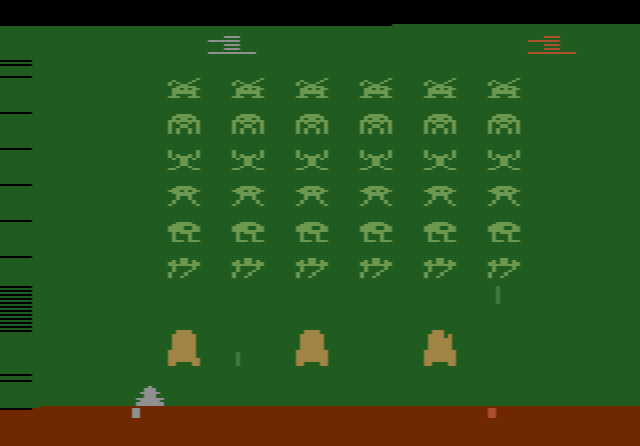
At the bottom of the scale are the games almost everyone owned. Combat, Pac-Man, E.T. the Extra-Terrestrial, Missile Command, Space Invaders and Asteroids all have at least one version rated Common. They are easy to find, and a good way to test whether a second-hand console works.
Why the label matters
Because the 2600 was sold for so long, many games were printed with several different labels, and collectors treat each one as a separate item. AtariAge’s label guide describes Atari’s main styles:
- Text # labels: the nine launch games of 1977 had plain labels with a number next to the name on the end label, Combat being 01. They came in gatefold boxes that open like a book, and Atari used this style for only about a year.
- Text labels: coloured text on black, with a grey border.
- Picture labels: introduced in 1981 with artwork in the middle. This is the most common Atari style.
- Silver labels: used from 1982 to 1985, alongside the picture labels.
- Red labels: used from 1986 to 1990, when Atari tried to revive the console, for reissues and new games alike.
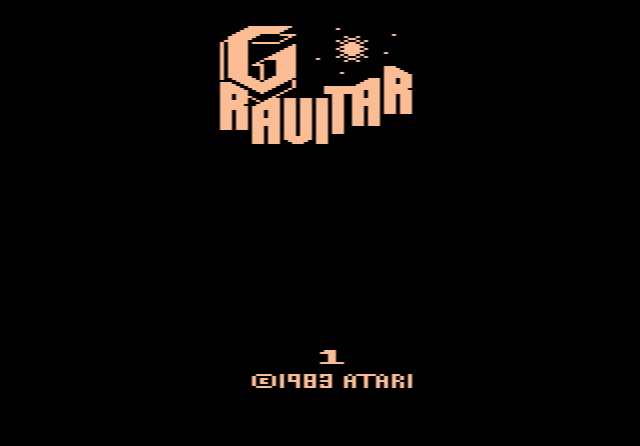
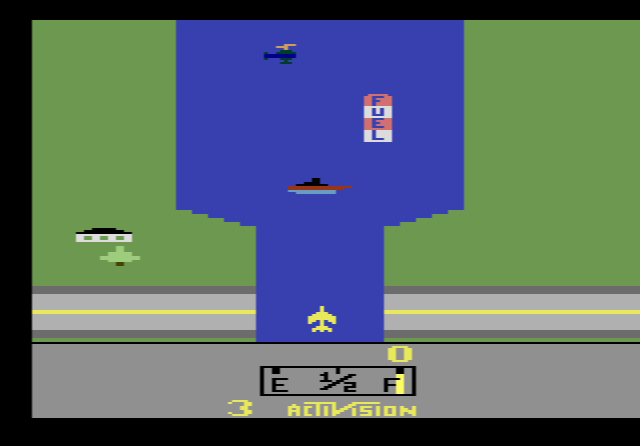
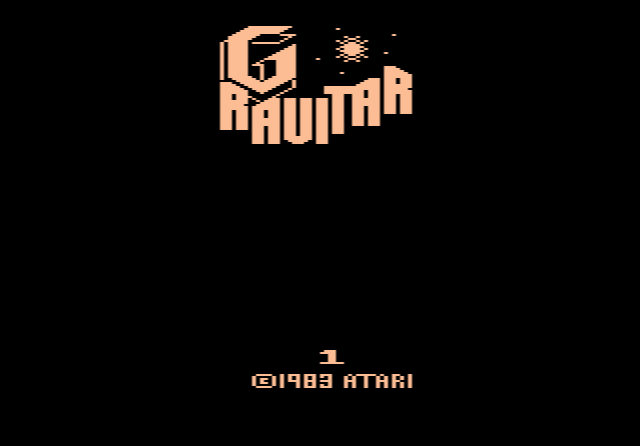
The same game can land at very different places on the scale depending on its label. Gravitar is the clearest example: the red label reissue is rated 2, the silver label original 8. Asteroids is rated 1 with a picture label but 3 with a silver one. Missile Command is Common from Atari, while the Sears Tele-Games picture label version is rated 5. Activision’s later plain blue labels are a step harder to find than the standard ones: River Raid is 2 with the standard label and 3 in blue.
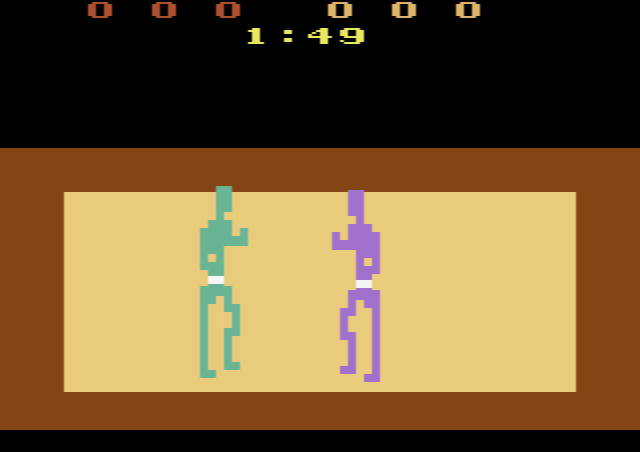
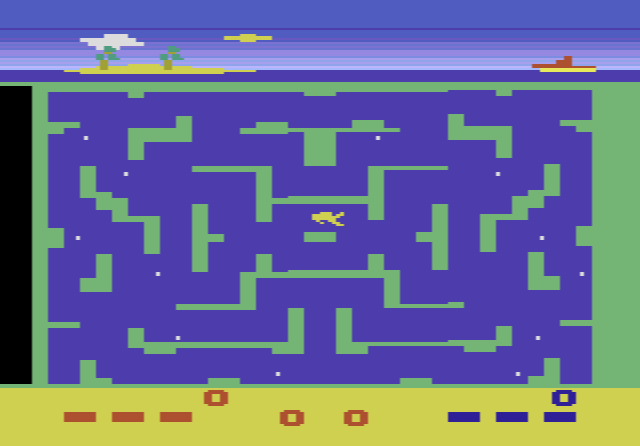
Publisher matters too. Karate is rated 10 on Ultravision’s cartridges, but the Froggo release is only Scarce+. Apollo’s Lochjaw is rated Extremely Rare. According to AtariAge, the name was changed after a lawsuit over its similarity to the film Jaws, and the game was sold again as Shark Attack, with some small differences.
The rarest cartridges, and why they are rare
The highest ratings almost always come with a story. Few of these games were rare because nobody liked them. Most were sold through unusual channels or made for a single customer.
- Gamma-Attack (Gammation, 1983) is rated Unbelievably Rare. Only one original copy is known, and Guinness World Records has listed it as the rarest video game.
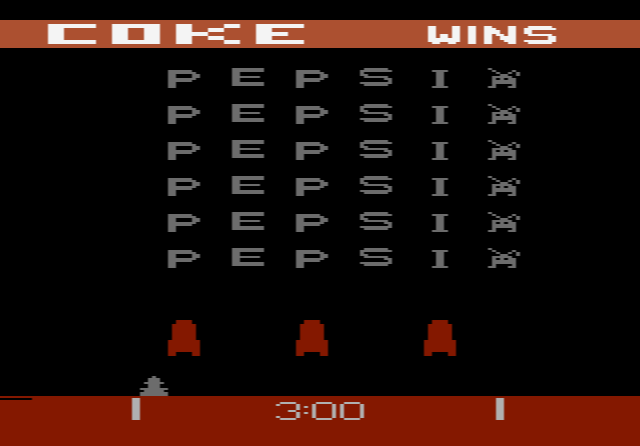
- Pepsi Invaders was made by Atari for Coca-Cola, a version of Space Invaders in which you shoot the letters P-E-P-S-I. AtariAge says 125 copies were made for Coca-Cola employees, packed in a plain foam shell instead of a proper box.
- Video Life, CommaVid’s version of the computer simulation Life, was offered only by letter to owners of CommaVid’s Magicard. AtariAge believes fewer than 500 were made.
- The Music Machine was sold only in religious bookstores. Eli’s Ladder, an educational maths game that came with a wall chart and stickers, had very limited distribution.
- Several games sold only by mail through the Atari Club are also high on the list, including Quadrun (9), Swordquest: Waterworld (9) and Crazy Climber (8).
Rare is not the same as valuable
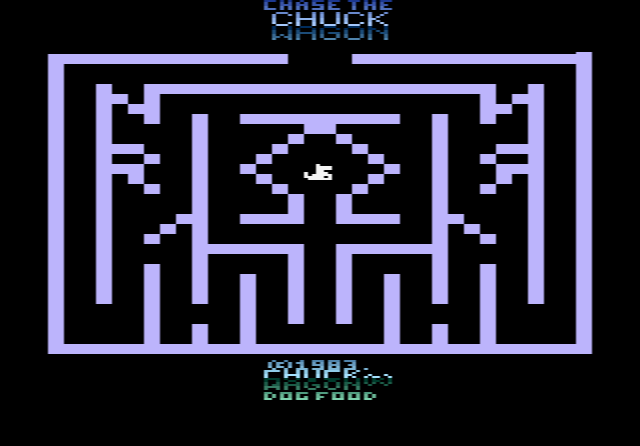
AtariAge makes this point itself, and its example is Chase the Chuck Wagon. Spectravision made the game for Ralston-Purina, and it was only available by mail order in exchange for proofs of purchase from bags of dog food. It is often called the most wanted 2600 game, but AtariAge rates it 8 and says it is not even in its top 40 rarest. Guardian has the same rating and sells for less, because it has no story behind it. Purina has told enquirers that its unsold copies were destroyed, and AtariAge notes that the box and manual are even harder to find than the cartridge.
It works the other way too. AtariAge notes that games like Pitfall! and Frogger can sell for more than other games of similar rarity, simply because many people want them back. What a game is worth depends on demand as much as on how many exist. Prices change quickly, which is why we do not quote any here. If you want a current figure, look at recently completed sales rather than asking prices, and note the date.
Condition: loose, boxed and everything in between
Collectors usually describe a game as loose (the cartridge alone) or complete (cartridge, manual and box, plus any inserts or overlays it came with). Boxes and manuals were often thrown away or lost over the years, so a complete copy is usually harder to find than the cartridge alone, as the Chase the Chuck Wagon box shows. When you look at a cartridge, check:
- The front and end labels: tears, fading, writing and stickers all lower the appeal.
- The label variation: make sure it is the one the seller describes. Compare it with the cartridge scans on AtariAge.
- The edge connector: the exposed contacts at the bottom. Dirt or corrosion there can stop a game from starting.
- The system: AtariAge warns that many copies sold as the 2600 version of Tomcat: The F-14 Fighter Simulator are really the Atari 7800 version with the wrong label. The only visible difference is the edge connector, which is wider on the 7800 cartridge.
Some odd-looking copies are genuine. Wizard Video cleared its stock of Halloween by shipping many cartridges with just a strip of tape and the name written by hand instead of a printed label. AtariAge lists this “no label” version separately and rates it 8, one step above the labelled version at 7. Wizard Video’s other game, The Texas Chainsaw Massacre, is rated 7.
Reproductions, homebrews and fakes
Not every new-looking cartridge is a fake. There are three kinds of newly made 2600 cartridges, and only one of them is a problem.
- Homebrews are new games written by fans. AtariAge dates the first homebrew cartridge to Ed Federmeyer’s SoundX in 1995, and new ones still come out every year. Lady Bug was sold through the AtariAge Store, and Halo 2600 made its debut on cartridge at the Classic Gaming Expo in 2010. Most stay available in some form, though some special editions are limited.
- Reproductions are newly made cartridges of old games, often of prototypes that were never sold. Honest reproductions say what they are. Gamma-Attack’s programmer, Robert L. Esken Jr., later made a run of 100 signed reproduction cartridges of his own game, for example.
- Fakes are copies sold as originals. The risk is highest with prototypes, where a genuine item is a bare circuit board with a hand-labelled memory chip. AtariProtos warns that copies of prototypes built with the same boards and chips as the real thing have been sold to unsuspecting collectors, and that such copies are considered worthless. AtariAge’s rarity guide gives its prototype rating to original prototypes only, not to reproductions, and adds a plain “beware of fakes”.
For an expensive purchase, ask for clear photos of the front, the back, the end label and, for prototypes, the board. Ask where the item came from, and compare it with the scans and forum discussions on AtariAge and AtariProtos before you pay. If a very rare cartridge is offered far below what similar copies have sold for, be suspicious.
Try before you buy
A rare cartridge is not always a good game. AtariAge itself calls Chase the Chuck Wagon one of the weakest games on the system and says people buy it for its history, not its gameplay. Before you spend money, play the game here. Load Mangia or Video Life and decide whether you want to own it or just want to have seen it. Then play a Common game like Pac-Man or River Raid, which costs little to own and still plays well on a real console.