Hundreds of Atari 2600 games reached the shops between 1977 and the early 1990s, but many others never did. Some were finished and waiting for a box. Some were killed weeks before release. Some were barely more than a title screen. A surprising number of them survived as prototype cartridges, EPROM boards or floppy disks, and collectors have tracked them down and shared them since the 1990s. AtariOnline.org has more than 30 of these lost games, and every one of them runs in your browser. This guide explains what each one is and, as far as anyone knows, why it never came out.
A word of warning before you start: a prototype is a snapshot of a game in progress. Expect missing title screens, bugs and the odd crash. That rough edge is part of the fun, because you are playing something that almost nobody outside the developer’s office saw at the time.
Arcade ports that came close
Arcade conversions sold consoles, so Atari and other publishers kept many of them in development. The collapse of the home video game market in 1983 and 1984 stopped several just short of the finish line.
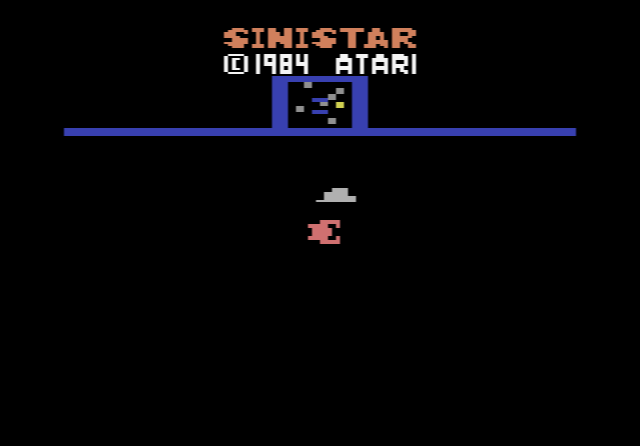
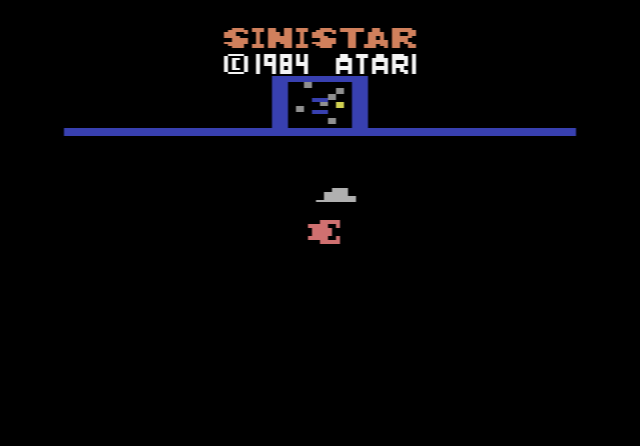
- Sinistar is a port of the 1982 Williams arcade game, and the builds that survived run from January to February 1984, the last one almost complete. The arcade machine had separate buttons for shooting and for Sinibombs. On the 2600 your ship fires automatically and the one button drops bombs. Atari had already commissioned artwork, but the game was shelved as the market fell apart.
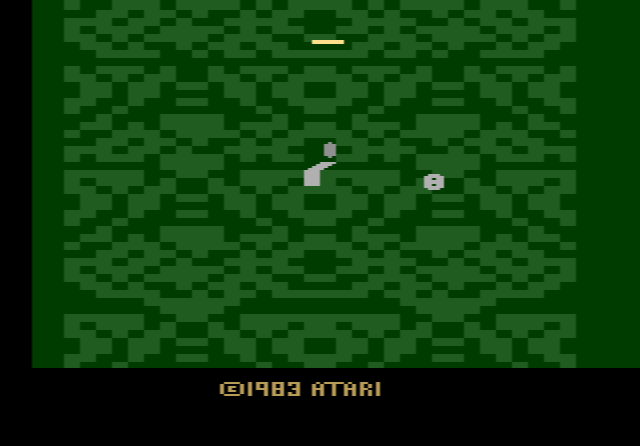
- Xevious was programmed by Tod Frye, who was taken off SwordQuest: Airworld to work on it. The latest known build, dated 18 January 1984, is nearly complete. One button fires at air targets and drops a bomb on ground targets at the same time, and the difficulty switches (F4 and F9 here) set the scrolling speed, a feature no other version has. Only the Atari 7800 version was ever released.
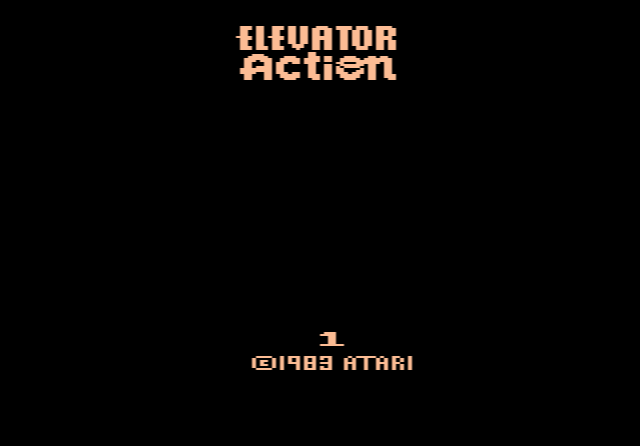
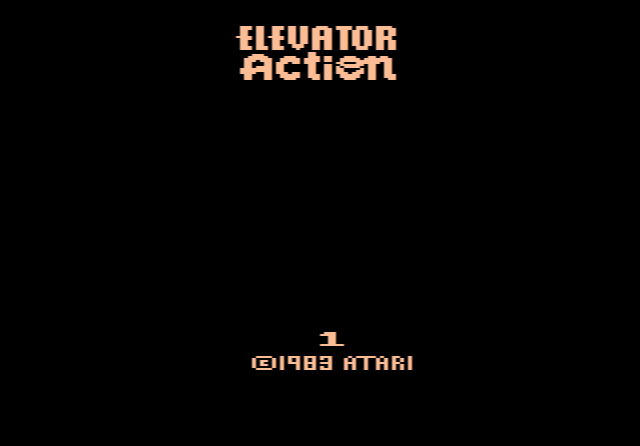
- Elevator Action is Dan Hitchens’s port of the 1983 Taito game. Its existence first came up as an April Fools’ joke, and then a real prototype turned up and was shown at the Philly Classic show. The prototype is unfinished (AtariProtos estimates about three quarters done), yet it keeps the arcade features: shooting out lights, crushing agents with elevators and riding escalators.
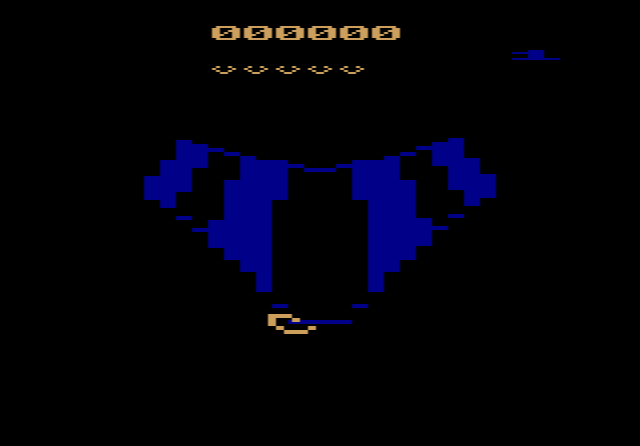
- Tempest survives as a prototype dated 5 January 1984, roughly half finished. The arcade game’s 3D tubes are drawn as flat shapes. Carla Meninsky is often credited, but she has said this is not her version.
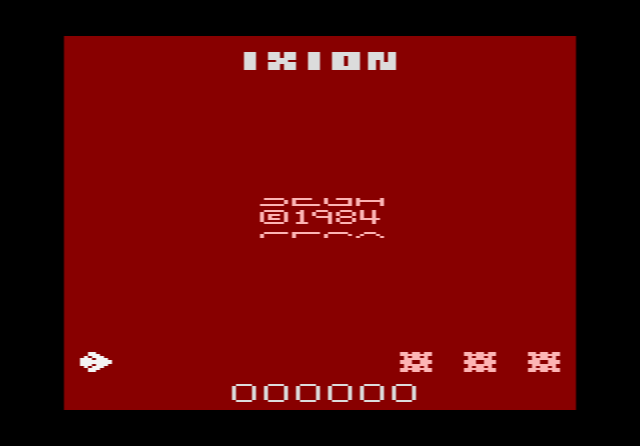
- Ixion is odd even among prototypes: a 2600 port of a Sega game that Sega never released on any system. Around this time Sega’s American arm was sold to Bally, and the port went nowhere.
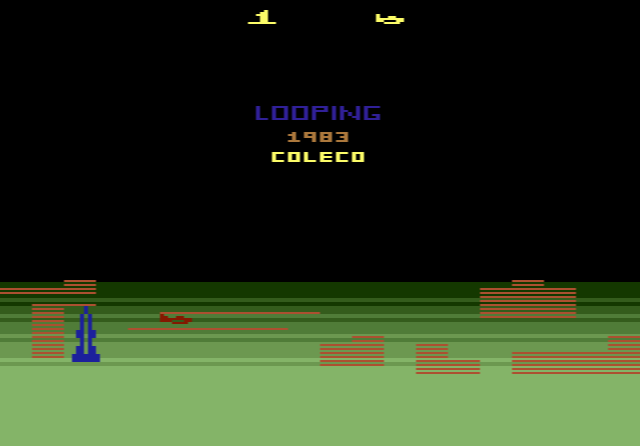
- Looping, Coleco’s version of the 1981 Venture Line coin-op, seems finished and was even advertised. Nobody knows why it was dropped. The cartridge turned up in 2003.
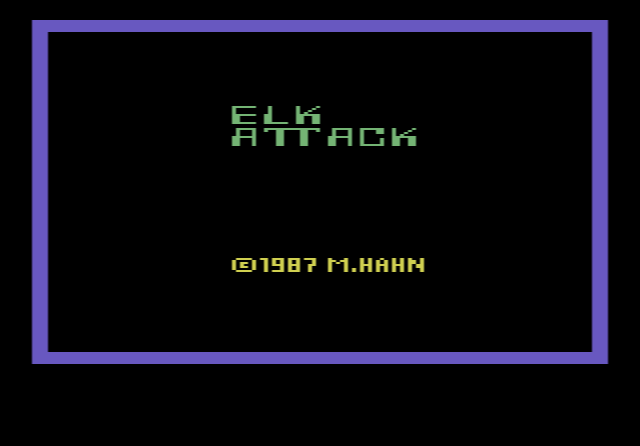
- Elk Attack, from 1987, contains no elk at all. It is Mark R. Hahn’s version of the obscure Taito arcade game Electric Yo-Yo, left unfinished during the late revival years of the 2600.
Finished or nearly finished, then caught by the crash
These are the saddest cases: games that were done, or close to done, when their publishers cut back or went out of business.
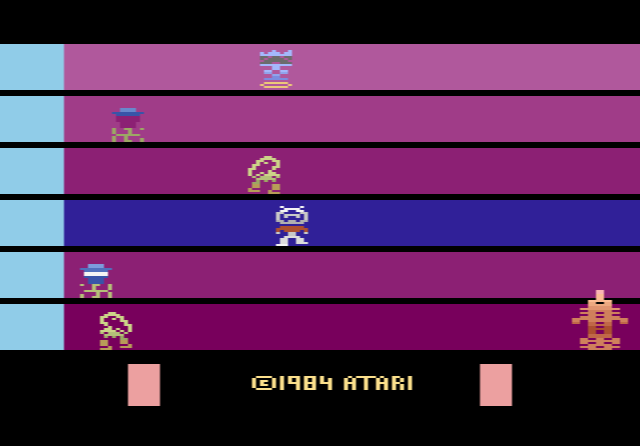
- Saboteur is a multi-screen shooter by Howard Scott Warshaw, the programmer of Yars’ Revenge and E.T. According to Warshaw it was complete and about to be released when Atari decided to turn it into an A-Team game. The A-Team version was never released either.
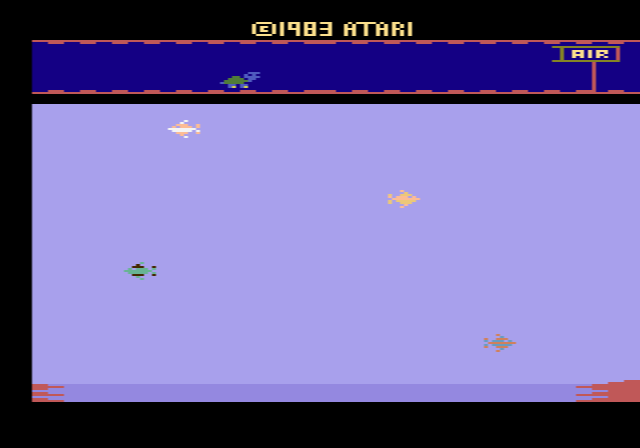
- Aquaventure never appeared on any Atari document or part list. Programmer Gary Shannon remembers finishing and testing it and being paid a completion bonus. One theory is that it fell victim to the review of all projects that new CEO James Morgan ordered in September 1983.
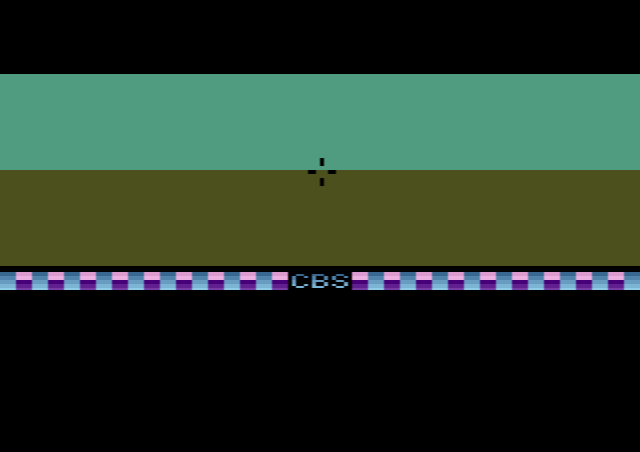
- Wings was an air combat game from CBS Electronics. CBS closed its cartridge development on 23 October 1983, only weeks before release, so late that promotional hats and scarves and even a TV commercial already existed. The most complete build, dated 10 October, survives only in PAL format; the version playable on this site is an earlier NTSC build, which is rougher and has no enemy planes yet.
- Meltdown from 20th Century Fox was shown at the 1983 CES, and adverts announcing it as “just released” were already printed. It then vanished until a collector found a copy in a resale shop in 2004.
- Secret Agent was the last game Data Age finished before the crash put the company out of business. It was finally sold on cartridge at the 2001 Classic Gaming Expo.
- Thwocker and Kabobber are two lost Activision games that surfaced in 2001. Thwocker, by Charlie Heath (dated April 1984), is a bouncing music game that was dropped as Activision moved away from the 2600. Kabobber, by Rex Bradford, had a different fate: Bradford finished it as a 4K game, Activision asked him to expand it to 8K, and he had run out of ideas, so it was never published.
- Cabbage Patch Kids: Adventures in the Park reached ColecoVision, but the 2600 version did not. It was adapted from an MSX game called Athletic Land, which is why this children’s game is surprisingly hard. Several builds dated May to September 1984 were found on EPROMs at a flea market in 2008.
- Star Wars: Ewok Adventure by Larry Gelberg for Parker Brothers was killed over its controls. You fly a hang glider that dives when you push forward and climbs when you pull back, and marketing wanted the Ewok to simply go where the joystick points. Gelberg refused, and the game was cancelled. It surfaced in 1997.
- Cubicolor is a sliding-tile puzzle by Rob Fulop, written between Demon Attack and Cosmic Ark. Imagic wanted an action game instead. Fulop had 50 cartridges made and hid them, then found 10 more in 1993 and sold them to collectors, so only about 60 exist.

Licensed games that lost their licence (or their way)
Film, TV and toy tie-ins were big business in 1982 and 1983. They also meant more people with opinions, and more reasons to cancel.
- Stunt Cycle (1980) is Bob Polaro’s port of Atari’s own Stunt Cycle console, played with the paddles like the original’s handlebar grips. Marketing then asked for it to be retooled as a Dukes of Hazzard game, with the motorbike turned into the General Lee and the row of cars into a lake. Neither version was released, and Stunt Cycle never got a product number.
- Dukes of Hazzard (1983) is Atari’s second attempt at the licence, by Mark R. Hahn’s team in New York. It had already been burned onto production ROM chips when Atari cancelled it. It was also the first 16K 2600 game: Hahn asked for the extra space to fit the 256 levels he had planned.
- Lord of the Rings: Journey to Rivendell by Mark Lesser stalled because the rights were split between two owners, and Parker Brothers got permission from only one of them.
- Bugs Bunny, by Bob Polaro, lost a play test against Snoopy and the Red Baron with groups of teenage boys and was shelved. Polaro released a finished version himself in 2002.
- Snow White and the Seven Dwarfs suffered from managers who kept changing their minds, so much that programmer Greg Easter nicknamed it “Snow White and the Seven Versions”. Two different versions exist. The second was considered for release before Atari cancelled its children’s line.
- Miss Piggy’s Wedding was stopped in June 1983. Gary Shannon has said the team could never find a playable concept that looked enough like the Muppets.
- Care Bears reached beta testing, according to its programmer, but the only prototype found is a graphics demo with two bears floating among clouds.
- McDonald’s (code name Big Mac) is just a title screen. Dave Engman put it on top of his own Tutankham code as a demo for marketing, and about 90 percent of the ROM is Tutankham.
- The Entity by Mark Klein was based on a 1981 horror film with adult themes that had not been a big hit, both likely reasons for its cancellation.
- Planet of the Apes and The Alligator People are a 20th Century Fox mix-up. For years collectors thought a cartridge found in an Alligator People case was that game, until a real Alligator People prototype turned up in 2002 and showed the first one was Planet of the Apes. Fox closed its video game unit before either was finished.
Too late: the 1989–1990 revival games
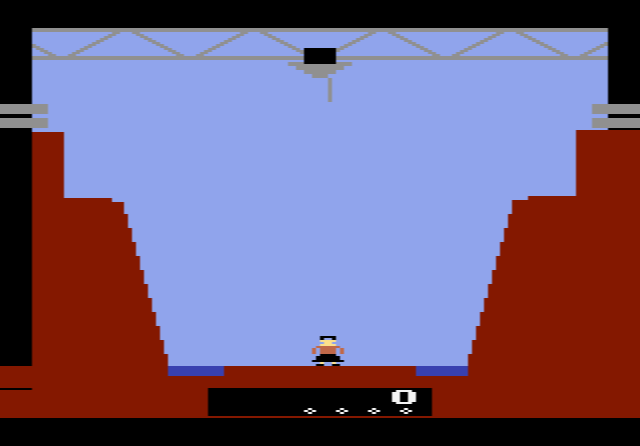
- Save Mary! may have been in development longer than any other 2600 game. Mary is stuck in a canyon that is filling with water, and you use a crane and oddly shaped blocks to build her a platform high enough to lift her out. The final build is dated November 1989, prototype artwork exists, and Nolan Bushnell is quoted as naming it one of his favourite upcoming 2600 games. Atari closed its 2600 operations in 1990 and it never shipped.
- Shooting Arcade was made for Atari’s light gun and developed in Mexico by Heuristica, finished in 1989. The aiming in the prototype is badly off, and by then the NES ruled the market. Atari chose to release the light gun game Sentinel instead. The emulator here has no light gun, so treat this one as something to look at rather than a full game.
Experiments, promotions and demos
- Bionic Breakthrough and Telepathy were written for the MindLink, a headband meant to read small movements of the player’s forehead. Bionic Breakthrough is a modified Super Breakout with a longer paddle and two new cooperative variations. Telepathy is a set of mini-games that also contains joystick code, so it plays better than the MindLink ever let it. Without the headband, both will feel different from what Atari intended.
- Mind Maze was an ESP game pitched to Atari by an ESP researcher and a psychic author. Programmer Gary Shannon says nobody could make it fun, and it was dropped after a couple of months.
- Peek-A-Boo was designed with the child psychologist Dr. Lee Salk for very young players, a niche the collapsing market had no room for.
- Polo may be the first promotional video game. In 1978 Warner, which owned both Atari and Ralph Lauren, had Carol Shaw write it to promote the Polo cologne. Prototypes were reportedly sent to Bloomingdale’s, but the promotion never happened.
- Frog Pond by Nick Turner has a frog catching insects, and a Sears Tele-Games version was even planned. Its part number was marked obsolete on 25 April 1983. The reason it was dropped is unknown.
- RealSports Basketball is the only RealSports game that Atari announced and never released. A box exists, but the game lacks basic rules such as fouls and a shot clock. Atari did much better later with Double Dunk.
- Venetian Blinds Demo is not a game at all. David Crane and Bob Whitehead’s short program raises and lowers a pair of blinds, and its sunset later appeared in Barnstorming. It stayed private until it was included on the Activision Anthology.
Where to start
If you only try three, make them Sinistar, Saboteur and Save Mary!: each plays like a finished game, and each shows what 2600 owners missed. Ewok Adventure is worth ten minutes once you accept the glider controls that got it cancelled. Cubicolor is a good calm puzzle for two players on one keyboard, with player 2 on T/F/G/H and A. The rest are best treated as a museum you can touch: load one up, press F12 to start, and see how far the programmer got before the lights went out.
Almost everything we know about these games comes from collectors and from the programmers themselves, much of it collected on AtariProtos.com. If you have a memory, a manual or a prototype to add, we would like to hear from you.