Atari stopped supporting the 2600 in January 1992, but new games for it never stopped coming. Hobbyists have been writing them ever since, mostly in the same 6502 assembly language the original programmers used, for a console with 128 bytes of RAM and no screen memory. These fan-made games are called homebrew, and the best of them do things the 1980s cartridges never managed. AtariOnline.org has a few dozen of them, and this guide picks the ones to play first. Every game below runs in your browser.
Where homebrew came from
The first hobbyist cartridge was not a game. In 1993 Harry Dodgson released a monitor cartridge, a tool for writing programs, built by recycling unsold Atari 7800 cartridges. In 1995 Ed Federmeyer released SoundX, a cartridge for experimenting with the console’s sound, and he borrowed the word “homebrew” from the Homebrew Computer Club of the 1970s. Since then more than a hundred games have appeared, many of them sold on cartridge by AtariAge. Modern tools made this easier: programmers test their code in emulators such as Stella, and since 2007 Fred Quimby’s batari Basic has let people write 2600 games without assembly language.
The controls are the same as for any game on the site: arrow keys and Space for Player 1, T/F/G/H and A for Player 2, F12 to start. Ctrl + 0–9 saves and Alt + 0–9 loads.
The headliners
Halo 2600 (Ed Fries, 2010)
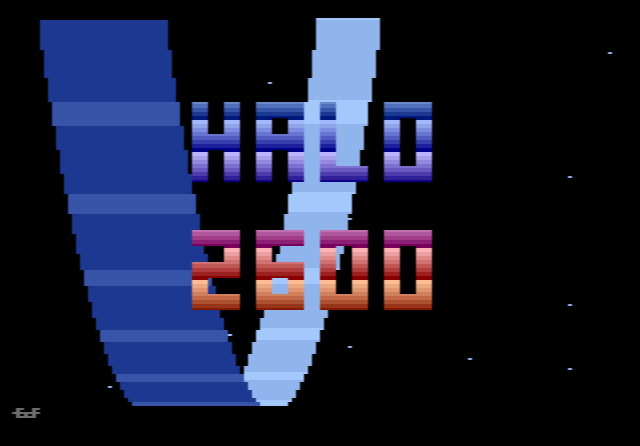
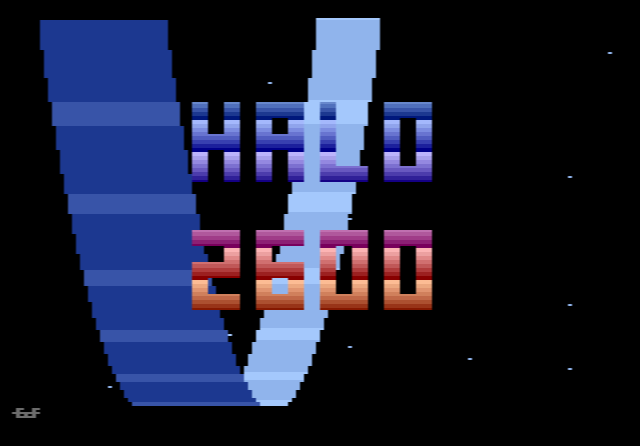
Halo 2600 asks what Halo would have looked like as a 1982 cartridge. It was written by Ed Fries, the former head of Microsoft Game Studios who helped Microsoft buy Bungie, the studio behind Halo. After reading the book Racing the Beam, he set out just to draw Master Chief on the 2600, and with help from the homebrew community the sprite grew into a full game in 4 kilobytes: 64 single-screen rooms in four zones, Berzerk-style shooting and weapons to find along the way. It is the most-rated homebrew on this site, with 4.7 stars from 34 votes, and in 2013 the Smithsonian American Art Museum included it in its exhibition “The Art of Video Games”.
Boulder Dash (Andrew Davie and Thomas Jentzsch, 2011)
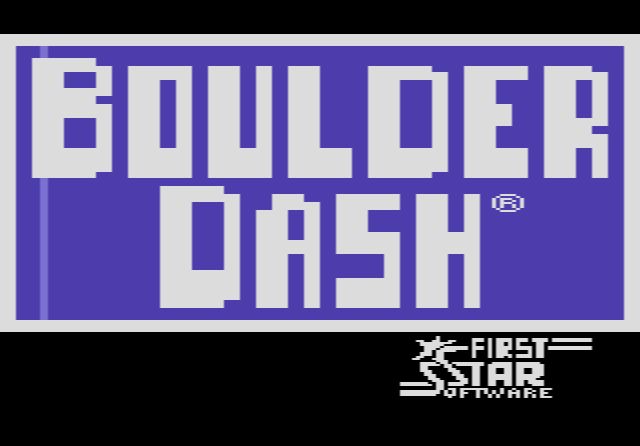
First Star Software’s 1984 digging puzzle had never been on the 2600. Two of the scene’s best-known programmers spent almost ten years on this version, with First Star’s approval, and it was sold as a limited run of 250 cartridges. Boulder Dash has Rockford dig through caves for diamonds while boulders fall into the gaps he leaves. According to its makers it includes all 16 caves and 4 intermissions of the original, each at five difficulty levels. Drop a boulder on a butterfly and it turns into diamonds.
Lady Bug (John W. Champeau, 2006)
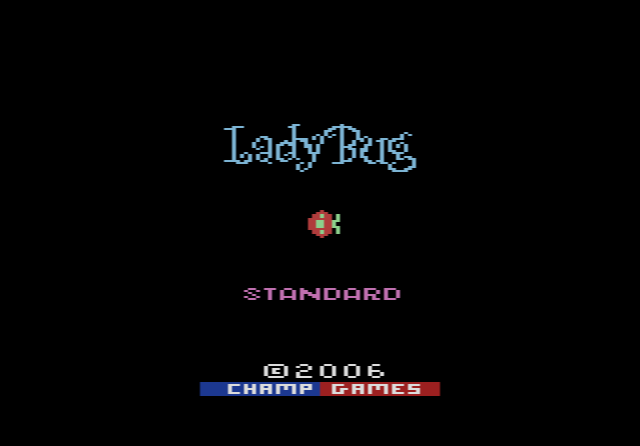
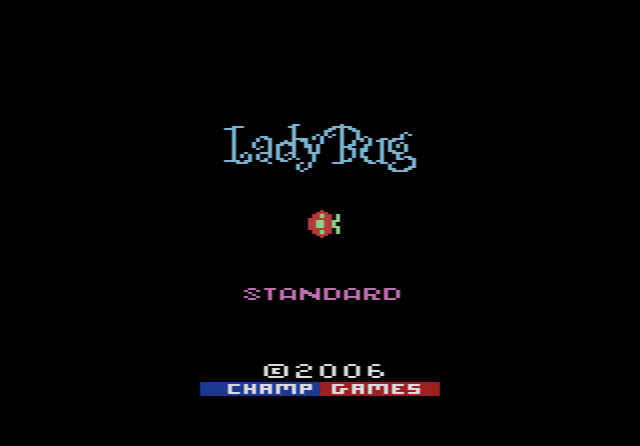
Coleco listed a 2600 version of Universal’s 1981 arcade maze game in a 1982 catalogue, but it never appeared. More than twenty years later, Champeau wrote Lady Bug from scratch. It plays like a dot-eating maze game with one big difference: green gates that swing when you push through them, so you can shut a path behind you and block the bug chasing you. Collect the right letters to spell EXTRA and SPECIAL. All six players who have rated it here gave it five stars.
Duck Attack! (Will Nicholes, 2010)
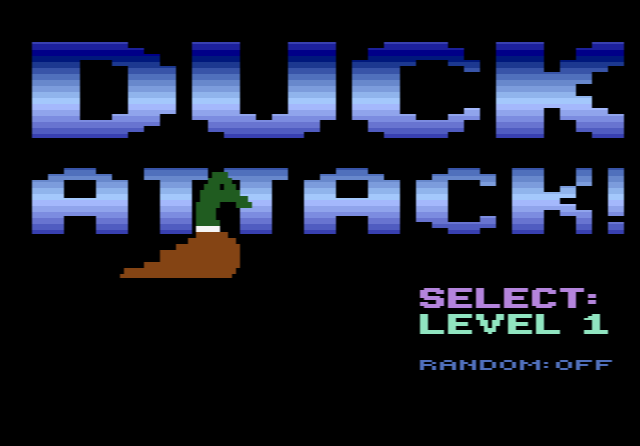
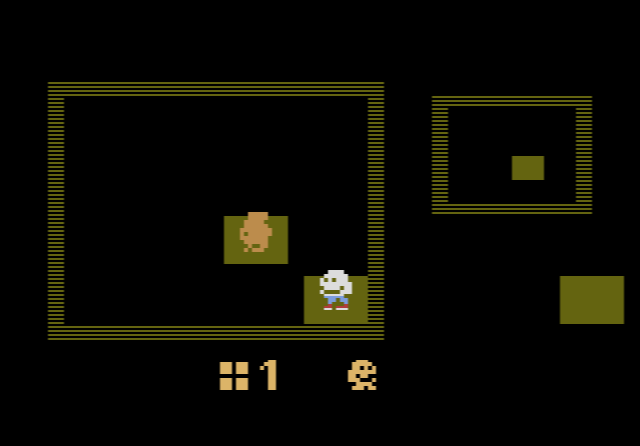
Duck Attack! began as a hack of Adventure and ended up as an original game. You control a robot exploring a mad scientist’s lair, collecting the radioactive eggs laid by giant fire-breathing ducks before he can build a doomsday device. Bring two eggs to the right exit to reach the next level. The sprites are larger and more detailed than usual for the console. 1UP.com described it as Adventure mixed with Resident Evil 3, “only with more ducks”, and The A.V. Club called it “awesomely weird”. It debuted at the Classic Gaming Expo in Las Vegas in July 2010, alongside Halo 2600.
Better versions of old favourites
Several homebrews take a game the 2600 already had and add what the original left out.
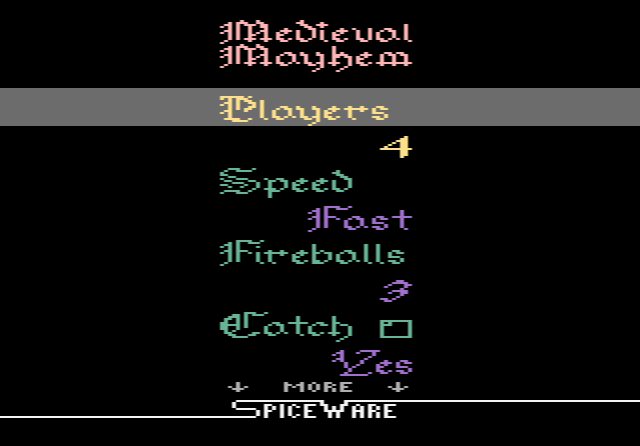
- Medieval Mayhem (Darrell Spice Jr., 2006) is Warlords with the arcade features that Atari’s 1981 cartridge lacked: the launch dragon, several fireballs at once, four computer skill levels and an options menu. It is a paddle game for up to four players. The emulator here supports two paddles; if the arrow keys do nothing, press Alt + L to switch to paddle mode.
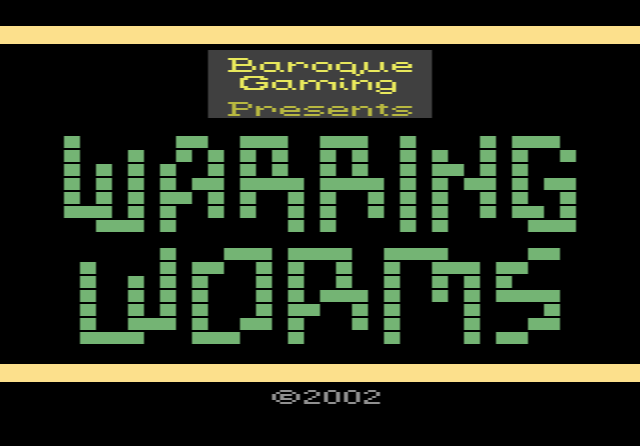
- Warring Worms (Billy Eno, 2002) builds on Surround. As before, you try to make your opponent crash into a wall or a trail, but now each worm has a cannon that can knock out a block or hit the other worm. It has ten starting playfields and 80 variations for one or two players.
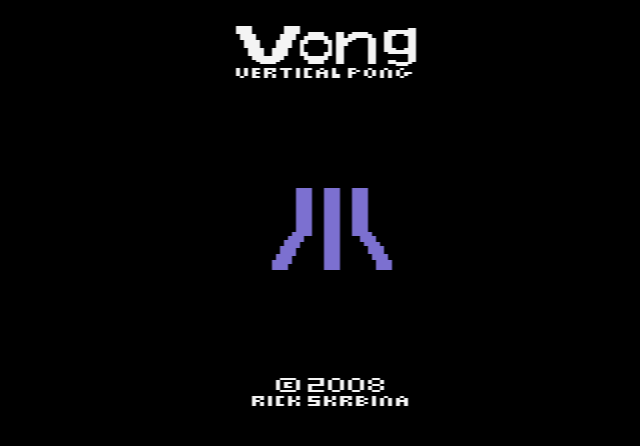
- Vong (Rick Skrbina, 2008) is Pong turned on its side, played with paddles, with small or large bats set by the left difficulty switch.
Ports of computer games
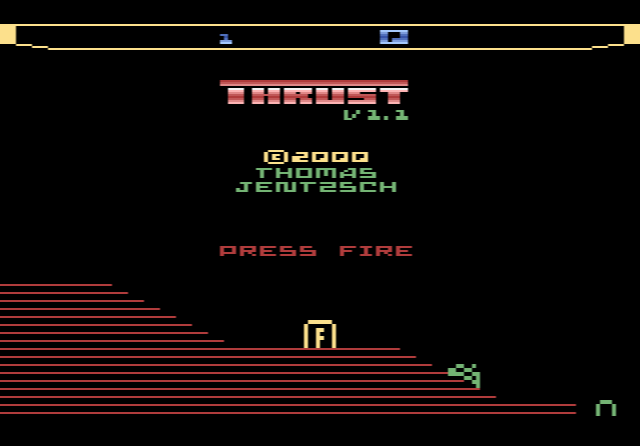
- Thrust (Thomas Jentzsch, 2000) brings Jeremy Smith’s 1986 BBC Micro game to the 2600. You rotate and thrust a small ship through caverns against gravity, a style that fans of Gravitar will know. Jentzsch kept improving it, with Thrust+ DC Edition in 2002 and Thrust+ Platinum after that.
- Qb (Andrew Davie, 2001) started as Davie’s own Atari 800 game from 1984. You push and jump between blocks to make them match a target pattern, picking up fruit and avoiding monsters. Its first release was a PhillyClassic edition of 50 copies.
- Squish ‘Em (Bob Montgomery, 2007) is a port of the Atari 8-bit game: climb 48-floor buildings to grab a suitcase of cash at the top, dodging falling bricks. You can squish each creature once, but it comes back white with rage and cannot be squished again.
- Climber 5 (Dennis Debro, 2004) ports a game that first appeared in a 1987 issue of COMPUTE! magazine: a baseball player climbs the ladders of a building site to fetch a ball from the rafters.
Original ideas
Oystron (Piero Cavina, 1997)
Oystron is one of the earliest hobbyist games for the console. It first came out as a free 4 KB file for emulators and the Starpath Supercharger, before XYPE put it on cartridge. You shoot space oysters, pick up the pearls they drop and carry them to the pearl zone on the left while other enemies try to steal them. Eight pearls earn a bomb, which is one way to beat the Oystron boss at the end of each level. Activision chose it for the Game Boy Advance version of Activision Anthology in 2003.
Seawolf (Manuel Rotschkar, 2004)
Seawolf draws on Midway’s Sea Wolf and Broderbund’s Seafox. You command a submarine and torpedo the ships crossing above, but torpedoes and fuel are limited and only supply containers refill them. Hit a Red Cross ship and your torpedo bounces straight back at you. It was named Homebrew of the Year in Stan’s Atari Excellence Awards for 2004, and its 24-pixel-wide multicoloured ships were described by AtariAge as a first for a 2600 homebrew.
Fall Down (Aaron Curtis, 2005)
Fall Down is a race between RED and BLUE to drop past scrolling platforms: the first player to fall past one captures it and scores. Wait too long and you die at the top of the screen, and the platforms slowly speed up. It works against a friend on one keyboard or against a computer opponent, and there are pass-by and invisibility modes. It was one of the first homebrews to support the AtariVox speech module, which saved high scores on a real console.
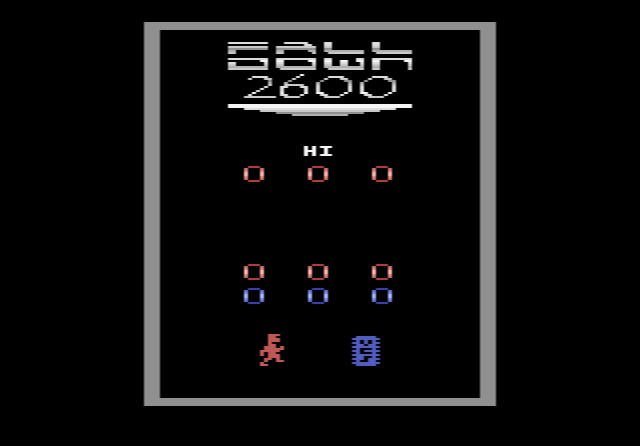
Wall Jump Ninja (Walaber, 2015)
One of the newest games here, Wall Jump Ninja is about a single move: jumping from wall to wall, holding the button to jump higher, while avoiding spikes. The difficulty switches add lava and a hard mode. Our players love it: it has five-star averages on all three of its versions (NTSC, PAL and PAL60).
More to explore
- Vault Assault (Brian Prescott, 2001), based on the arcade game Space Zap. Prescott sold out every cartridge he brought to the 2001 Classic Gaming Expo.
- Hunchy II (Chris Walton, 2005), a sequel to the arcade game Hunchback, in which Quasimodo collects the bells in each room of the cathedral across 14 levels.
- 2005 Minigame Multicart, seven games of just 1 KB each by four programmers.
One homebrew you cannot really play here is Synthcart by Paul Slocum, which turns the 2600 into a music instrument using two keyboard controllers. The emulator has no keypad support, so it cannot be played properly in the browser.
Homebrew games have fewer votes on this site than the 1980s classics, simply because fewer people know them. If you find one you like, rate it on its page. It helps other players find it, and it is a small thank-you to the people who still write games for a 1977 console.