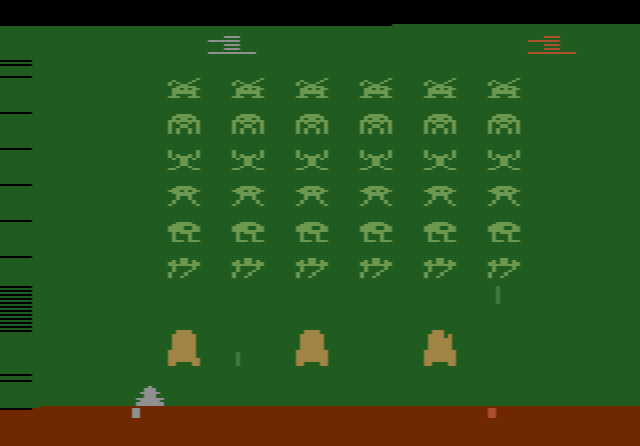
The Atari 2600 was on sale for about fifteen years, longer than almost any console before it. It arrived in 1977 as the Atari Video Computer System, survived the crash of 1983, came back as a budget console in 1986 and was finally discontinued in 1992. This timeline follows it year by year, with the games that mark each stage. Every game linked below can be played on this site, and each year links to our archive of games from that year, so you can browse what else came out at the same time.
Before the launch: 1975–1976
In the mid-1970s every home Pong machine could play only the games built into it. Atari’s engineering subsidiary Cyan Engineering wanted a console that could run different programs, and in September 1975 the cheap MOS Technology 6502 processor made that affordable. Atari chose the even cheaper 6507, and the prototype was codenamed “Stella”, after the brand of engineer Joe Decuir’s bicycle. Jay Miner designed the TIA chip that draws the picture and makes the sound. Atari could not pay for the launch on its own, so in October 1976 Nolan Bushnell agreed to sell the company to Warner Communications for $28 million.
The Video Computer System years: 1977–1981
1977: nine cartridges and a pack-in
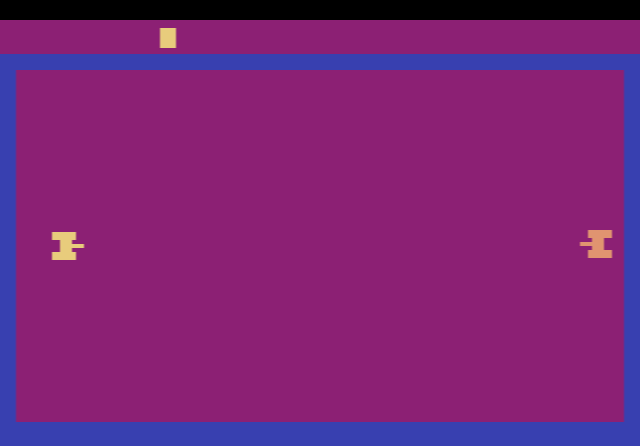
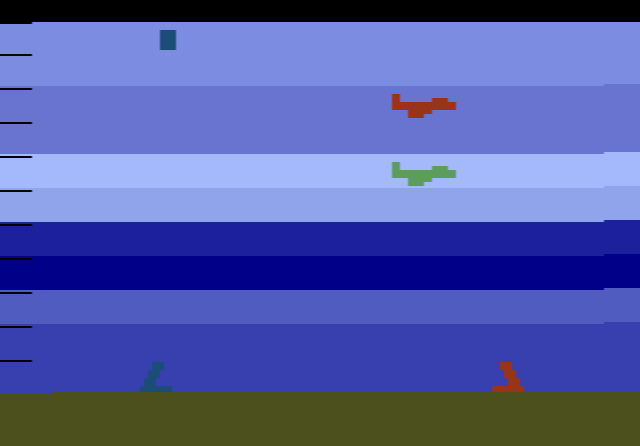
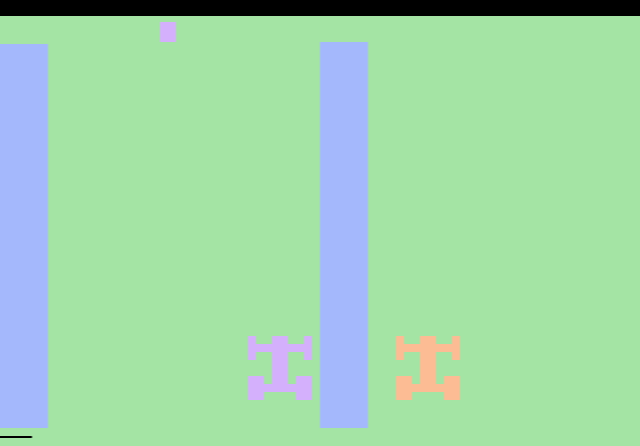
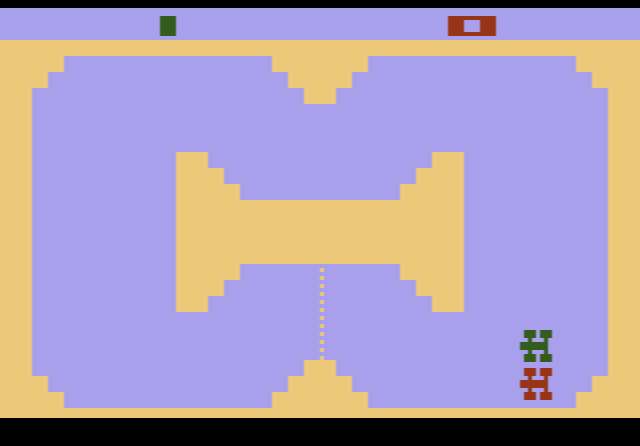
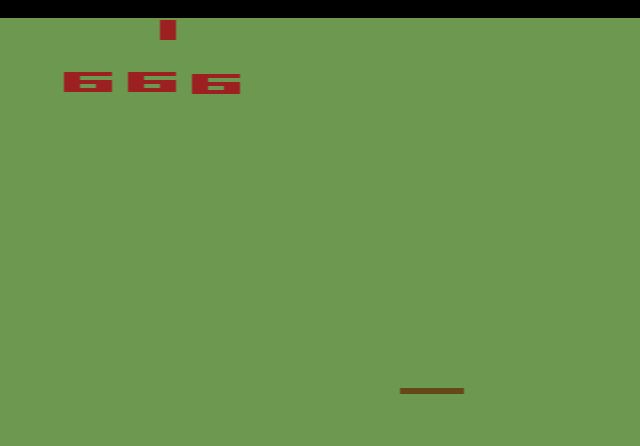
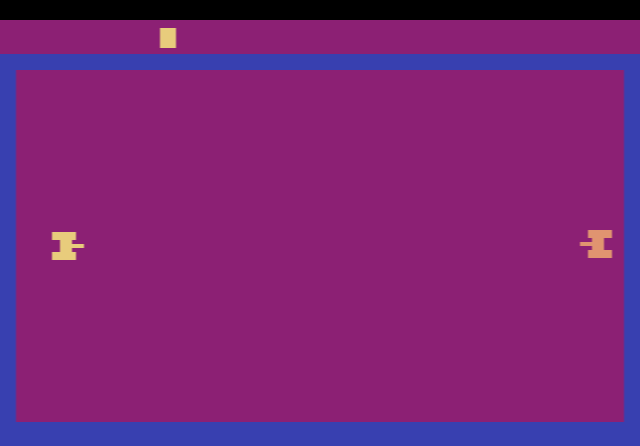
The console was shown at the Summer Consumer Electronics Show on 4 June 1977. Production started in July, and units began reaching shops in August, priced at about $199 (some sources give $189.95). Combat came in the box; the other eight launch games, including Air-Sea Battle, Video Olympics, Street Racer and Indy 500, followed in September. Each fitted on a 2 KB cartridge. Atari sold between 350,000 and 400,000 consoles that year. Sears sold the same machine under its own name, the Tele-Games Video Arcade.
1978: a slow second year
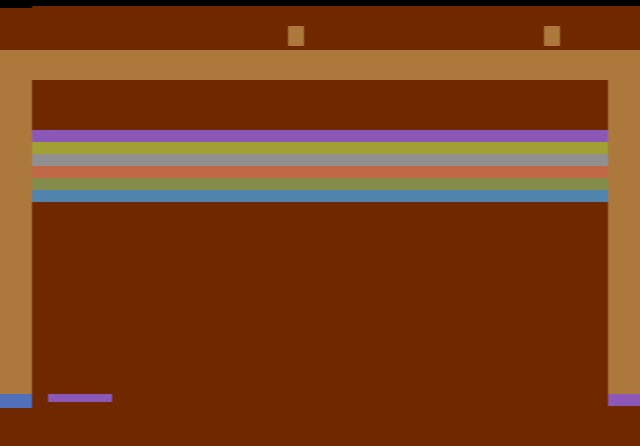
Atari made 800,000 consoles in 1978 but sold only 550,000, and Warner had to cover the losses. Through 1977 and 1978 Atari released its new games in one batch for Christmas. The October 1978 batch included Breakout, which was in colour at home while the arcade original was black and white, and Codebreaker, one of the games made for the new keyboard controller. Production moved to Asia that year, and the lighter “Light Sixer” console replaced the original “Heavy Sixer”.
1979: Bushnell leaves, Activision is born
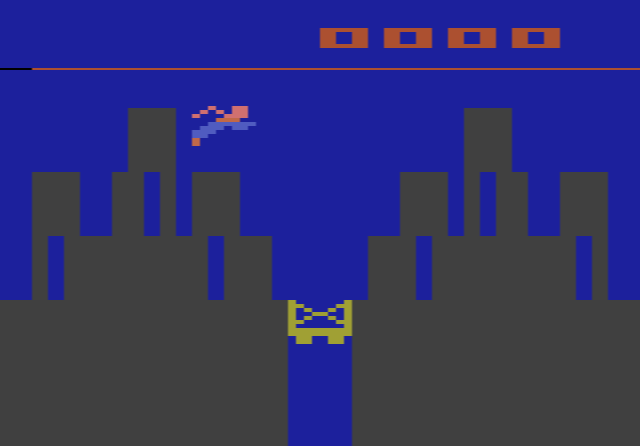
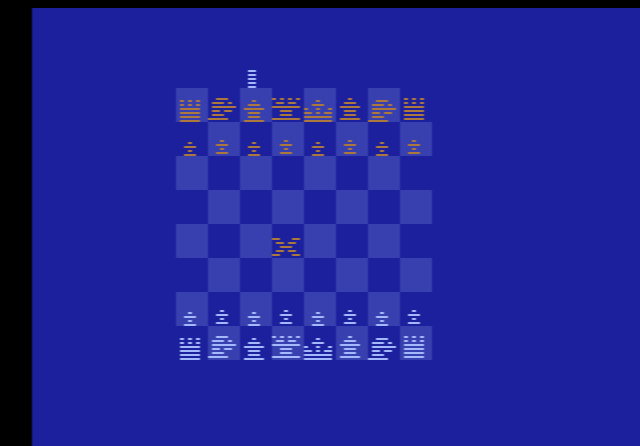
Bushnell had urged Warner’s board to start work on a successor. The board stayed with the VCS, and he left Atari in 1979. Sales picked up to about 600,000 consoles, taking the total past 1.3 million. Superman arrived in September and Video Chess in November. On 1 October 1979, four Atari programmers founded Activision in Sunnyvale, the first company to make games for someone else’s console.
1980: the killer app
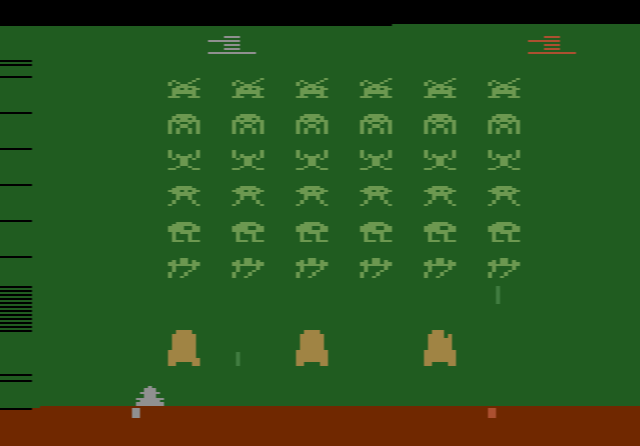
In March 1980 Atari released Space Invaders, the first officially licensed arcade game for a home console, and Adventure, with its hidden Easter egg. Space Invaders sold 1.25 million cartridges that year and helped Atari sell more than a million consoles. Activision’s first four cartridges, among them Dragster and Boxing, came out in August. The console itself changed too: the difficulty switches moved to the back, leaving four switches on the front.
1981: bigger cartridges
Missile Command arrived in April and Activision’s Kaboom! in July. In August, Asteroids became the first 2600 game to use bank switching, a trick that let a cartridge hold 8 KB instead of 4 KB. Atari sold an estimated 3.1 million consoles in 1981.
Boom and crash: 1982–1984
1982: the peak
This was the year the 2600 ruled. Pac-Man came out in March and sold over seven million copies that year, despite the complaints. Activision’s Pitfall! followed in September, and E.T. in December. In November the VCS was renamed the Atari 2600, to sit next to the new Atari 5200. Third-party games made up half of all VCS game sales, and our 1982 archive holds almost 150 games. On 7 December, Warner warned that Atari would grow far less than expected, and its share price collapsed.
1983: too many games
1983 is by far the biggest year in our archive, with around 270 games, from Ms. Pac-Man and Enduro to dozens of cheap cartridges from companies that did not survive. It was also the year of the video game crash. Atari lost $536 million, and in September it buried unsold stock in a New Mexico landfill. In October Atari brought a version of the console to Japan as the Atari 2800, just after Nintendo’s Famicom, and it made little impact there.
1984: Tramiel takes over
Some strong games still came out, such as H.E.R.O. and Pitfall II: Lost Caverns in March. Atari announced the 7800, a new console that could also play 2600 cartridges, on 21 May. But on 2 July Warner sold Atari’s consumer business to Jack Tramiel, the founder of Commodore, and he halted 2600 game development soon after. By the middle of the year, only Atari and Activision were still making 2600 games.
The comeback: 1985–1989
1985: the quiet year
Our 1985 archive has a single game, Activision’s Ghostbusters, and that is about right: very few new 2600 cartridges came out. Atari Archive dates Ghostbusters to August 1985, Wikipedia to October. The Nintendo Entertainment System arrived in North America that year.
1986: under 50 bucks
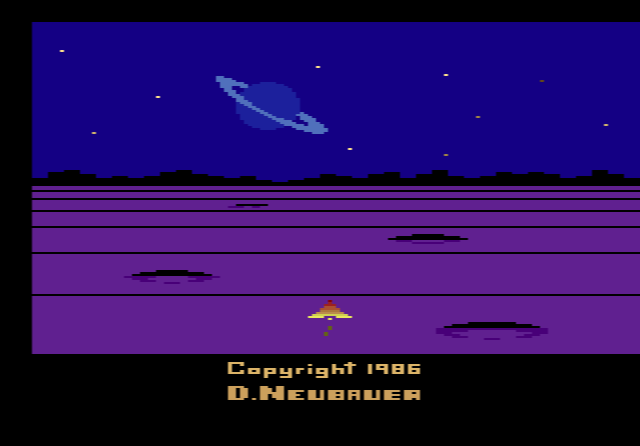
Tramiel’s Atari Corporation relaunched the console as a small, cheap model, later nicknamed the 2600 Jr., with adverts promising a price of “under 50 bucks”. The 7800 finally went on sale in May. Games finished years earlier were finally released: Jr. Pac-Man, completed in 1984, came out in October, and Midnight Magic followed in November, still showing a 1984 copyright on screen. Doug Neubauer’s Solaris, pitched in 1984 and finished only after Atari called him back, also arrived in November. By 1986 more than 20 million VCS consoles had been sold worldwide.
1987 and 1988: arcade and computer hits
The late 2600 library leaned on names people knew from arcades and home computers. Activision’s Kung-Fu Master came out in September 1987, and Epyx brought Summer Games and Winter Games that October. In 1988 came Commando and California Games in June, and Activision’s River Raid II in November.
1989: Bushnell’s name on the box
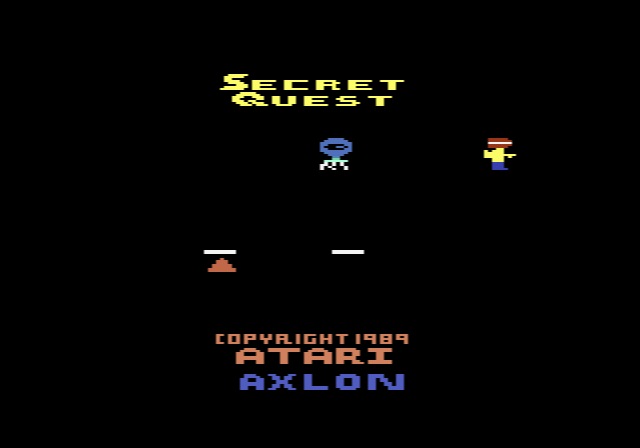
Secret Quest, released in May 1989, carries Nolan Bushnell’s name and photo on its box. Its programmer, Steve DeFrisco, later explained that “Atari thought that his name would entice people to buy some more 2600 titles”. It is also one of the late games that gave the TV type switch a new job: flicking it brings up a status screen with your items and a code for continuing the game later. Dark Chambers and Rampage came out the same month, and Activision’s Double Dragon that autumn.
The last cartridges: 1990–1992
1990 and 1991: the finale
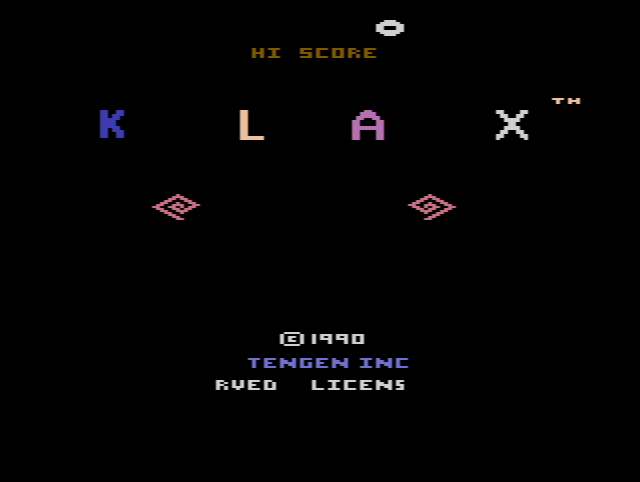
By now Europe mattered more than America. Fatal Run, at 32 KB the biggest cartridge Atari ever released for the 2600, came out only in Europe in 1990. Klax is often called the last 2600 game Atari developed and released, and it too appeared only in PAL form. Wikipedia dates it to mid-1990 in the UK, but the final PAL build listed by AtariProtos is dated 24 October 1991. Best Electronics later found finished NTSC copies, which you can play here as Klax (NTSC).
In North America the last licensed games were Ikari Warriors, MotoRodeo, Sentinel and Xenophobe. When they came out is disputed. Wikipedia, following Random Terrain, says July 1990. Atari Archive says no new games appeared in 1990 at all and places all four in March 1991, citing the 2600 Connection newsletter and a CES order form. Sentinel is also the only 2600 light gun game that was ever released. Meanwhile the console kept selling in Europe: 200,000 units in 1991, and a bestseller at the British retailer Littlewoods.
1992: the end of production
Atari Corporation ended production of the 2600 in 1992, together with the 7800 and its 8-bit computers. About 30 million 2600s had been sold. Even then, cartridges kept coming in Europe: the British publisher Salu released Activision’s shelved Ghostbusters II in 1992, and Wikipedia names Salu’s Acid Drop as the last licensed European release. The remaining stock of 2600 and 7800 consoles was sold in Western Europe until 1995.
After 1992: the homebrew years
The 2600 never quite stopped. Fans kept writing new games for it, and our archive has entries for many later years, from 1994 up to 2015. Halo 2600 (2010) and Boulder Dash (2011) are good places to start. The console was inducted into the National Toy Hall of Fame in 2007, and in November 2023 Atari released the Atari 2600+, a smaller replica that plays original cartridges.
A note on dates
Release dates for 2600 games are harder to pin down than you might expect. Few companies announced exact dates, games were often advertised months before they reached shops, and Sears sometimes sold a game before Atari did. The dates above come mostly from Atari Archive’s list, which is built from newspaper adverts and trade magazines of the time, and from Wikipedia. A few games in our archives are filed under a different year from these sources, for example:
- Super Breakout is filed under 1978, the year of the arcade game; the 2600 cartridge came out in October 1981, first as a Sears exclusive.
- Stellar Track and Steeplechase, two of the Sears-only games, are filed under 1980; both sources give March 1981.
- Desert Falcon is filed under 1987. Atari Archive says December 1987, Wikipedia December 1988.
- Crossbow and California Games are filed under 1987; Atari Archive dates the 2600 cartridges to May and June 1988.
- Dark Chambers is filed under 1988; Atari Archive says May 1989.
If you know a better date for any game on the site, with a source, we would like to hear about it. In the meantime, pick a year above and play your way through it.