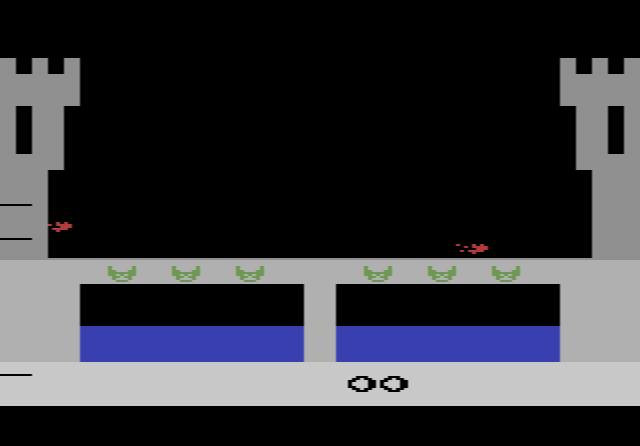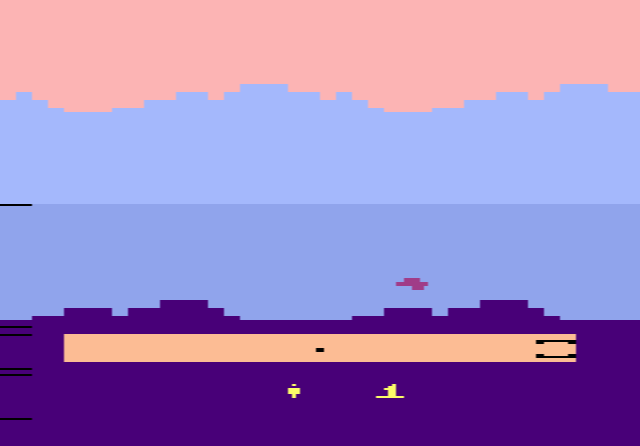
Once Activision had shown in 1980 that you could sell games for a console you did not make, a lot of companies wanted in. Some were small studios started by programmers. Others were a board game maker, a toy giant, a TV network, a film studio and a cereal company. Each of them approached the 2600 in its own way, and you can still see it in their games. Here are the most important publishers after Activision, what made each one different, and which of their cartridges you can play on this site.
Imagic: the second programmer-run company
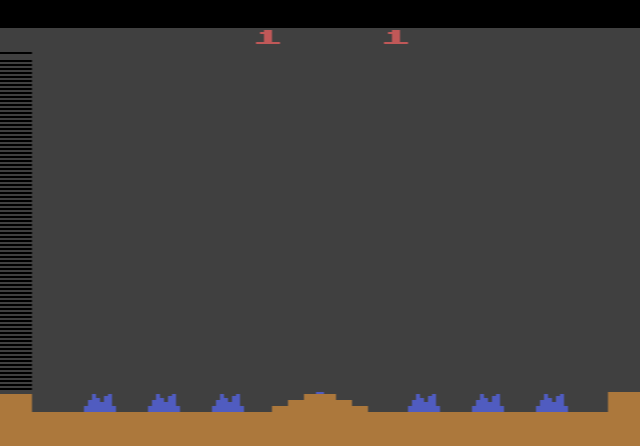
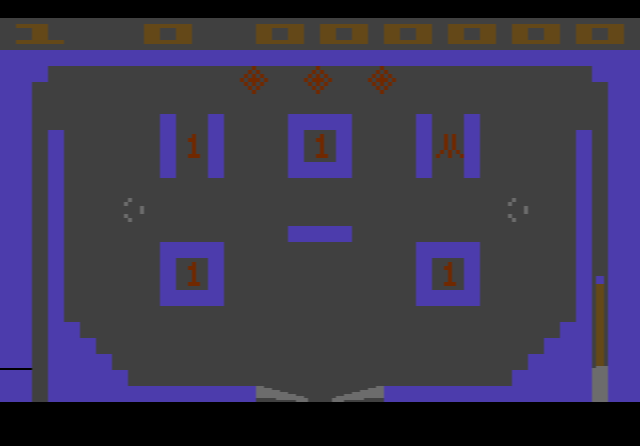
Imagic was incorporated in California on 1 June 1981. Its founders came from the two biggest names in the business. Bill Grubb had been Atari’s vice president of sales and marketing, and Dennis Koble had managed game development there. Jim Goldberger and Brian Dougherty came from Mattel. The programmers included Rob Fulop, who had written Missile Command for the 2600, and Bob Smith, who had made Video Pinball. The company raised $2 million from venture capitalists to get started.
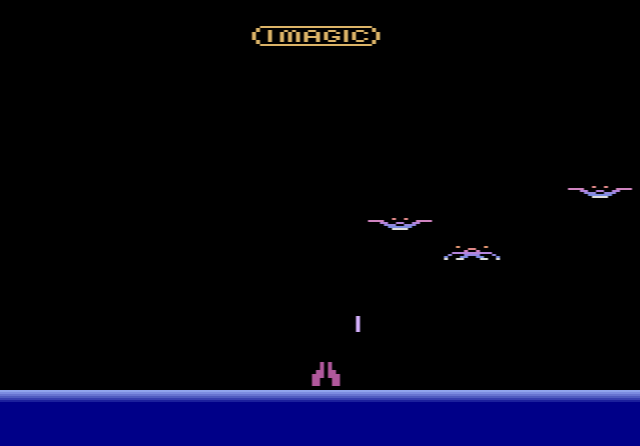
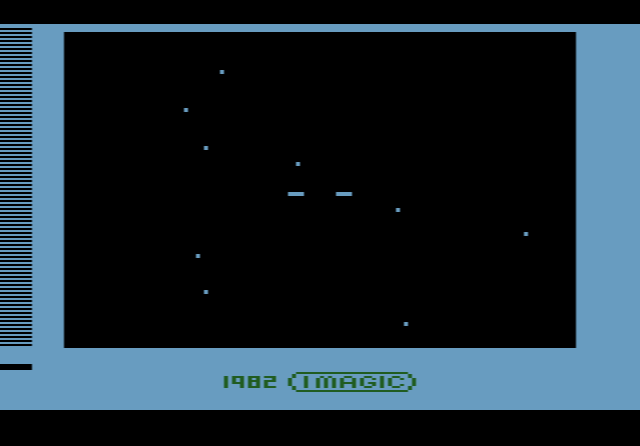
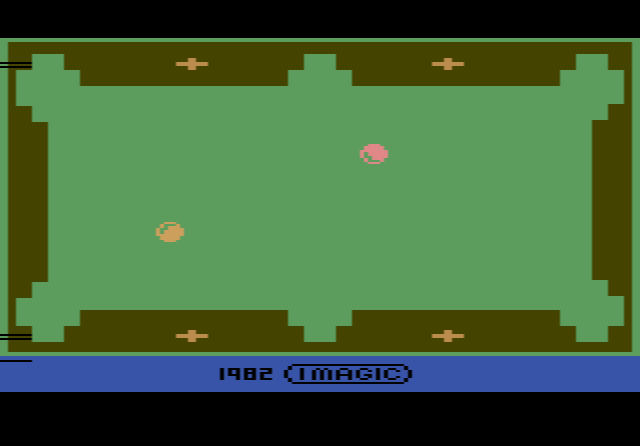
Its first three cartridges came out together in spring 1982: Demon Attack, Star Voyager and Trick Shot. Demon Attack, Fulop’s take on Galaxian, carried the company. Imagic sold $48 million worth of games in its first three quarters of sales, and Demon Attack was one of the best-selling console games of 1982. Imagic also looked different in the shop. Its boxes were reflective silver, and its cartridges had an extended ridge along the top.
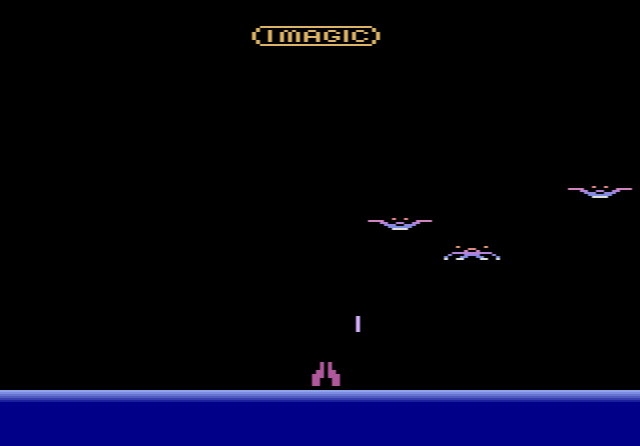
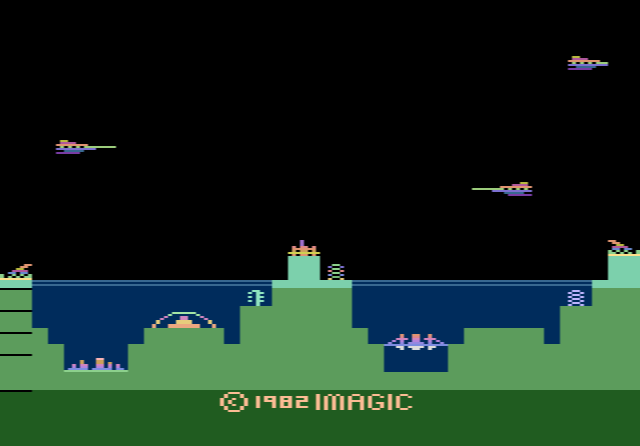
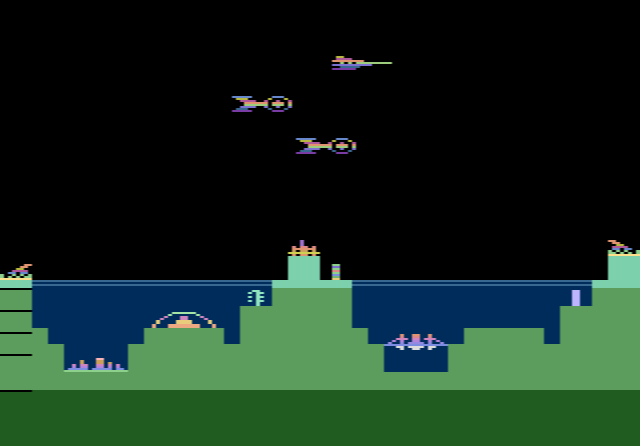
More hits followed in 1982. In Koble’s Atlantis you defend an underwater city from gun posts at the bottom of the screen. For a high-score contest, Koble made the harder Atlantis II to settle the final, because good players could keep going almost forever. Fulop’s Cosmic Ark continues the Atlantis story, and Bob Smith’s Dragonfire began as a cat-and-mouse game called Cheese before it became a dragon and a treasure room.
Imagic planned to go public on 10 December 1982. It called this off after Warner announced that Atari’s Christmas sales were well down. In September 1983 it laid off 40 of its 170 staff. By October it had stopped making its own games and only did design work, and in November Grubb was replaced as chief executive. The company was eventually liquidated in 1986. All the Imagic games on this site are in the publisher archive.
Parker Brothers: the board game company with the licences
Parker Brothers, the maker of Monopoly, had belonged to General Mills since 1968. It had already had a hit with the handheld Merlin in 1978. To make 2600 cartridges it spent $50,000 reverse-engineering the console, and then it bought the rights that mattered: Lucasfilm’s Star Wars, and cartridge rights to arcade games from Konami, Nintendo and Gottlieb.
Its first big year was 1982. Star Wars: The Empire Strikes Back lets you fight the Imperial walkers on Hoth. The science fiction author Harlan Ellison called it a “shamelessly exploitative little toy”, partly because you can never win. Frogger did even better. Parker Brothers reported $40 million in orders at launch and four million cartridges sold by the end of the year. In November came Spider-Man, designed by Laura Nikolich, where you climb a skyscraper with your web line. Between June and December 1982 the company earned $74 million from cartridges.
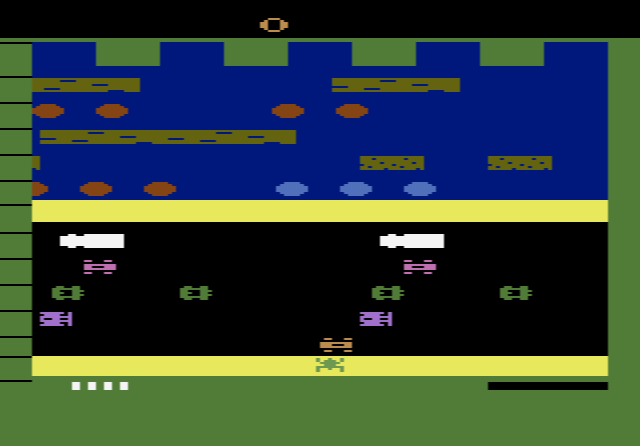
After that it mostly made arcade conversions. There were Q*bert, Popeye, Gyruss and Star Wars: The Arcade Game. It also bought a computer game: Montezuma’s Revenge, which Robert Jaeger wrote on an Atari 800 when he was 16. Parker Brothers licensed it after seeing an unfinished version at the 1983 Consumer Electronics Show. See all Parker Brothers games.
Coleco: helping its rival’s console
Coleco started in 1932 as the Connecticut Leather Company, which is where the name comes from. In 1982 it launched its own console, the ColecoVision, and packed it with Nintendo’s Donkey Kong. It also sold cartridges for the machines it was competing against. That year it sold six million cartridges for the 2600 and Intellivision, plus two million for its own console.
The biggest was Donkey Kong. Garry Kitchen had about 90 days and a 4 KB cartridge, so two of the arcade screens had to go. The 2600 version still sold four million copies in 1982. Coleco did not make all of its 2600 games itself. Venture was converted by the small developer CommaVid, and Smurf: Rescue in Gargamel’s Castle by the New Jersey studio James Wickstead Design Associates.
Coleco also went after the 2600 from the hardware side. Its Expansion Module #1 let the ColecoVision play 2600 cartridges, and the Gemini was a complete 2600 clone. Atari sued over the module. The case was settled out of court, and Coleco took a licence under Atari’s patents. See all Coleco games.
M Network: Mattel on Atari’s machine
Mattel’s Intellivision was the 2600’s main rival, but Mattel could count too. One of its executives explained the move simply: there would be “between 8 and 11 million Atari units in the marketplace by Christmas. Why shouldn’t we make software for a hardware base like that?” From 1982 to 1983 it sold 2600 versions of its Intellivision games under the name M Network. Most were programmed by APh Technological Consulting, and they usually came out four to six months after the Intellivision originals, often under new names. The cartridges also had their own shape, with a base that fitted the 2600’s wider slot.
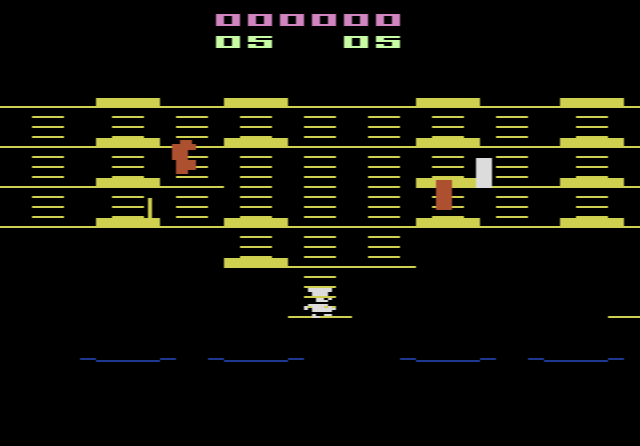
So Astrosmash became Astroblast, and Frog Bog (May 1982) became Frogs and Flies (October 1982). Night Stalker became Dark Cavern, with blobs that steal your bullets instead of the original’s bats. The arcade licences Mattel held for the Intellivision came across too: BurgerTime, Lock ‘n’ Chase and Bump ‘n’ Jump, along with the Disney film tie-in Tron: Deadly Discs. See all M Network games.
Cereal, television and film
Big companies from outside toys also joined in. The strangest case is Quaker Oats. General Mills had Parker Brothers, so in 1982 Quaker bought U.S. Games, a small handheld electronics maker, to put up a rival. U.S. Games released its first cartridge, Space Jockey, in January 1982, and published 14 in about 18 months, including Gopher and Name This Game. None of them sold well. “None of our games became a hit,” a Quaker spokesman said, and Quaker closed the division in 1983 with a $1.9 million loss. See all U.S. Games cartridges.
20th Century Fox set up Fox Video Games under the slogan “Games of the Century”. Much of its catalogue was actually made by Sirius Software, a home computer publisher, which developed ten 2600 games for Fox in 1982 and 1983, among them Fast Eddie, Turmoil, Worm War I and Flash Gordon. Fox kept the film licences, such as Alien. The arrangement ruined Sirius: it collapsed in 1984 after Fox failed to pay more than $18 million in royalties it owed. See all 20th Century Fox games.
CBS, the TV network, sold games as CBS Electronics and converted arcade games from Bally Midway. Its Gorf came out in December 1982 without the arcade’s Galaxians stage, because Bally had lost the rights to Galaxian. Some later CBS cartridges, such as Tunnel Runner and Mountain King, used a “RAM Plus” chip that put an extra 256 bytes of memory inside the cartridge, on top of the 2600’s own 128 bytes. See all CBS Electronics games.
The toy company Tiger sold 2600 games as Tigervision, mostly conversions of existing games. It released ten, among them King Kong, Miner 2049er and John Harris’s Jawbreaker, a maze game Atari had tried and failed to stop in court. See all Tigervision games.
The small studios
Not everyone had a big company behind them. CommaVid was founded in 1981 in Aurora, Illinois, by Irwin Gaines, John Bronstein and Joseph Biel, and its name is short for Computer Magic Video. It published six games, including Cosmic Swarm and the well-reviewed Mines of Minos. Its Video Life, a version of Conway’s Game of Life, is so rare that fewer than 20 cartridges are thought to exist. See all CommaVid games.
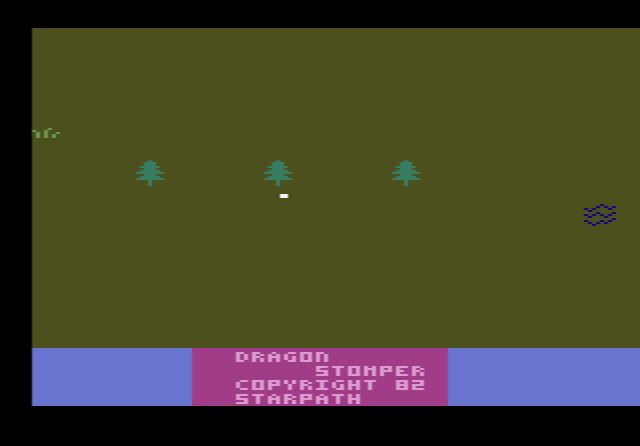
Starpath had the most unusual idea. It was founded in June 1981 as Arcadia Corporation and changed its name after Emerson released a console called the Arcadia 2001. In August 1982 it launched the Supercharger, an add-on for the cartridge slot that added RAM to the 2600 and loaded games from an ordinary cassette player. The extra memory made room for bigger games, like the fantasy adventure Dragonstomper and The Official Frogger, which looks closer to the arcade than Parker Brothers’ cartridge. Epyx bought Starpath in 1984. See all Starpath games.
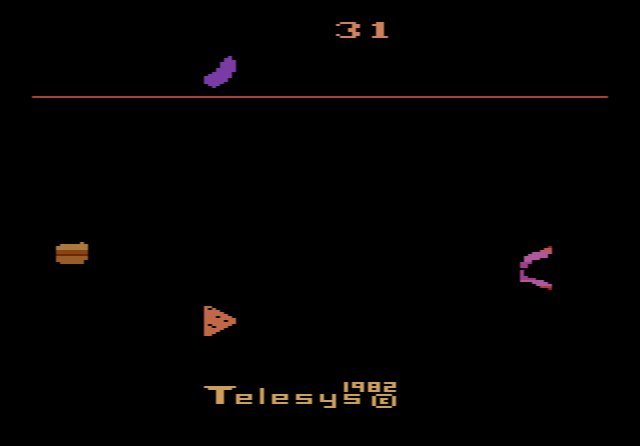
Telesys, from Fremont, California, made six games before the crash closed it. The best known is Fast Food, a game about a big mouth catching burgers and fries, which won a Certificate of Merit at the Arkie Awards in early 1983 as the most humorous home arcade game. See all Telesys games.
What happened to them
Most of these publishers lasted only two or three years. U.S. Games closed in 1983, Mattel sold off its video game business, Starpath went to Epyx, Sirius went bankrupt, Imagic was liquidated in 1986, and Coleco pulled out of electronics early in 1985. Together they left behind a big part of the 2600 library, and some of the console’s best games are theirs.
Where to start
- Demon Attack (Imagic): the game that made Imagic, and still one of the most played shooters on this site.
- Atlantis (Imagic): three gun posts and a city to defend, then Atlantis II if you want the contest version.
- Frogger (Parker Brothers): the four-million seller. Try The Official Frogger afterwards and compare.
- Donkey Kong (Coleco): only two screens, but the barrel jumping works well.
- BurgerTime (M Network): the arcade game where you build burgers by walking over the ingredients.
- Fast Food (Telesys): short, silly and a good example of the smaller publishers.